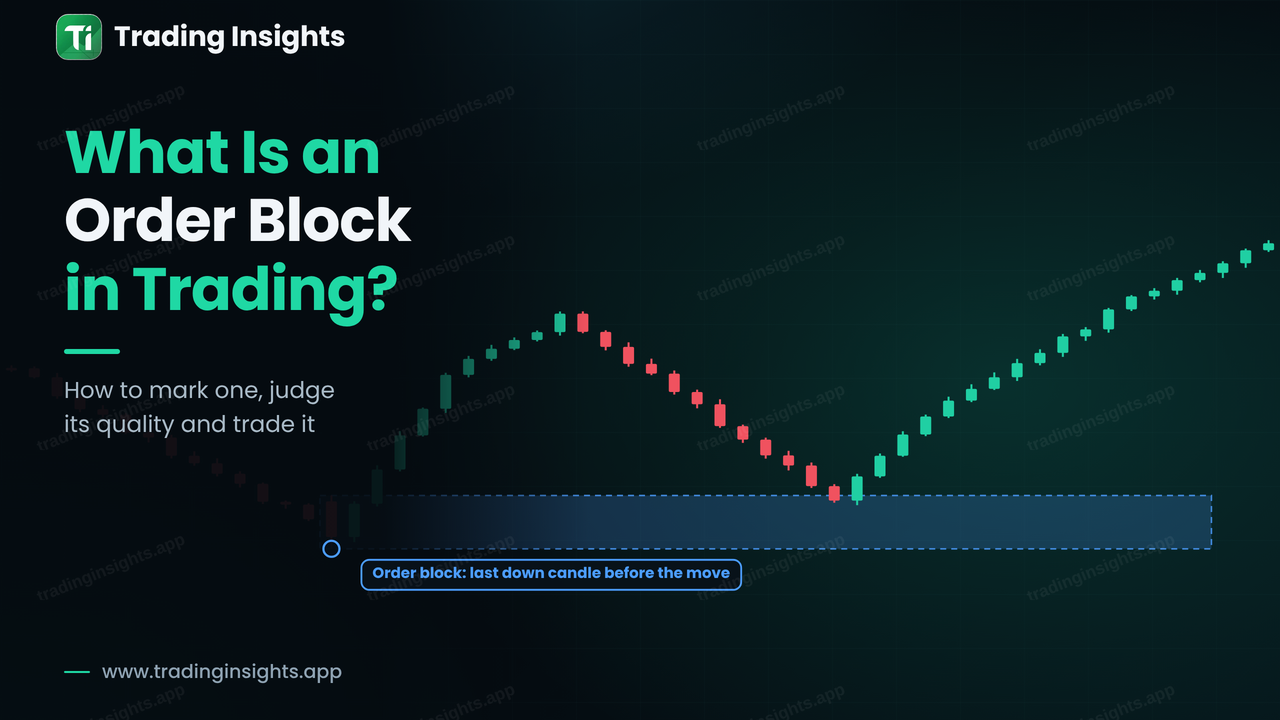
An order block is the last opposite candle before a strong move that breaks market structure. The last down candle before a sharp rally is a bullish order block, and the last up candle before a sharp drop is a bearish one. Traders mark the candle as a zone and watch it for a reaction when price returns. The idea is that the strong move began with a burst of orders from that area, and some of those orders may still be waiting. This guide explains how to mark an order block, how to tell a strong one from a weak one, and how to build a trade plan around it with a stop and a target.
What an order block is, and the theory behind it
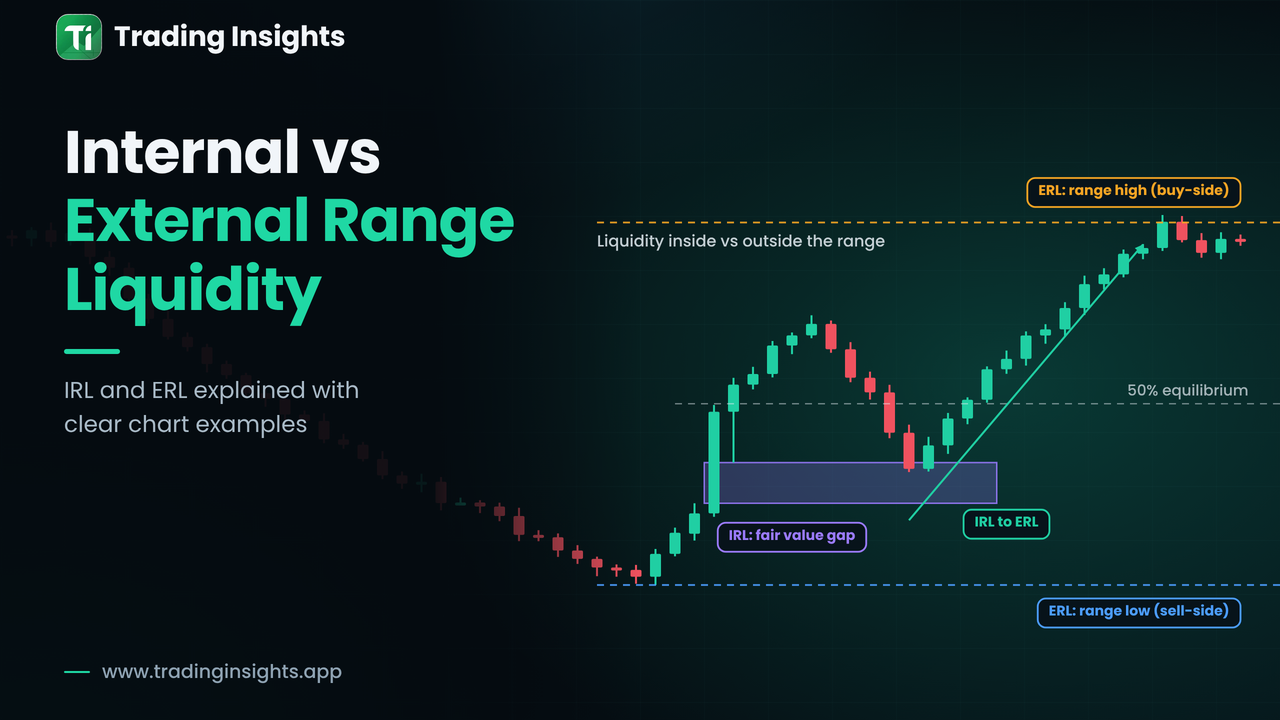
Large participants cannot fill big orders at a single price without moving the market. The theory is that they build positions over several candles, and the final opposite candle before an impulsive move marks the area where that activity took place. When price later returns, unfilled orders or traders who missed the move may react at the same area. This is a theory about order flow and it cannot be seen directly on a retail chart, so an order block should be treated as an area of interest, never as a guaranteed turning point.
It is also related to supply and demand zones. If you want to compare the two ideas, read support and resistance vs supply and demand zones. The main difference is that an order block is anchored to one specific candle that came right before a structure break.
How to mark a bullish order block
Follow these steps on any timeframe.
- Find a strong move up that breaks structure. Price should close above a recent swing high with large, one-sided candles. See what a break of structure is.
- Go back to where the move started. Find the last down candle before the rally.
- Draw a rectangle from the high to the low of that candle (some traders use only the body) and extend it to the right.
- Wait for price to return to the zone, and look for a reaction.
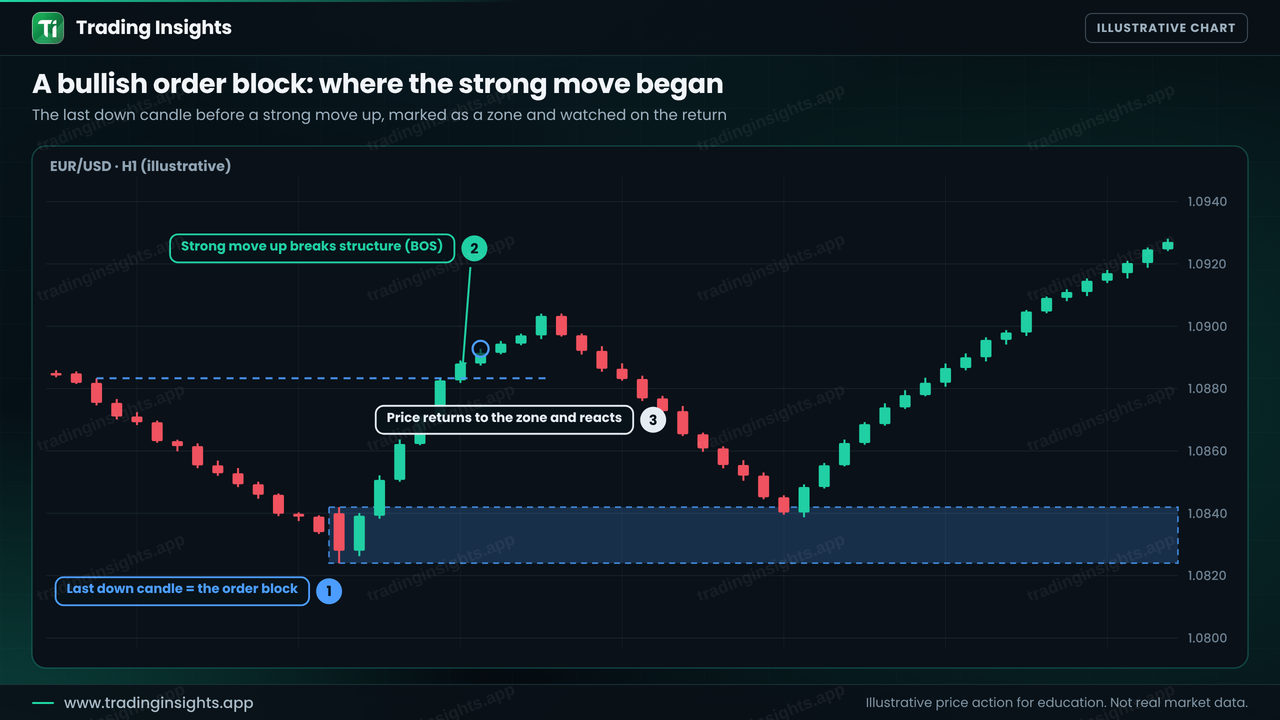
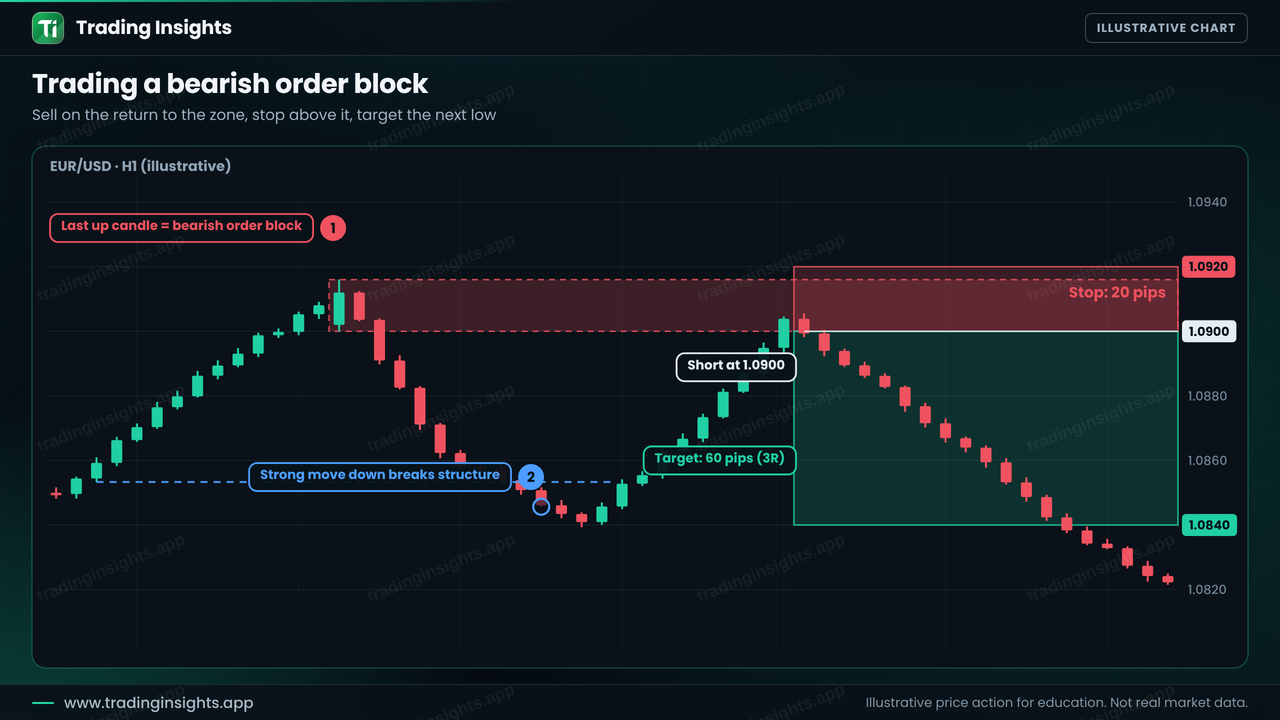
A bearish order block is the mirror image. Find a strong move down that breaks a swing low, then mark the last up candle before it.
Strong or weak? Judging order block quality
Not every down candle before a rally is worth watching, and a chart can be filled with dozens of candidates. The quality of the departure, meaning the way price left the zone, matters more than the candle itself.
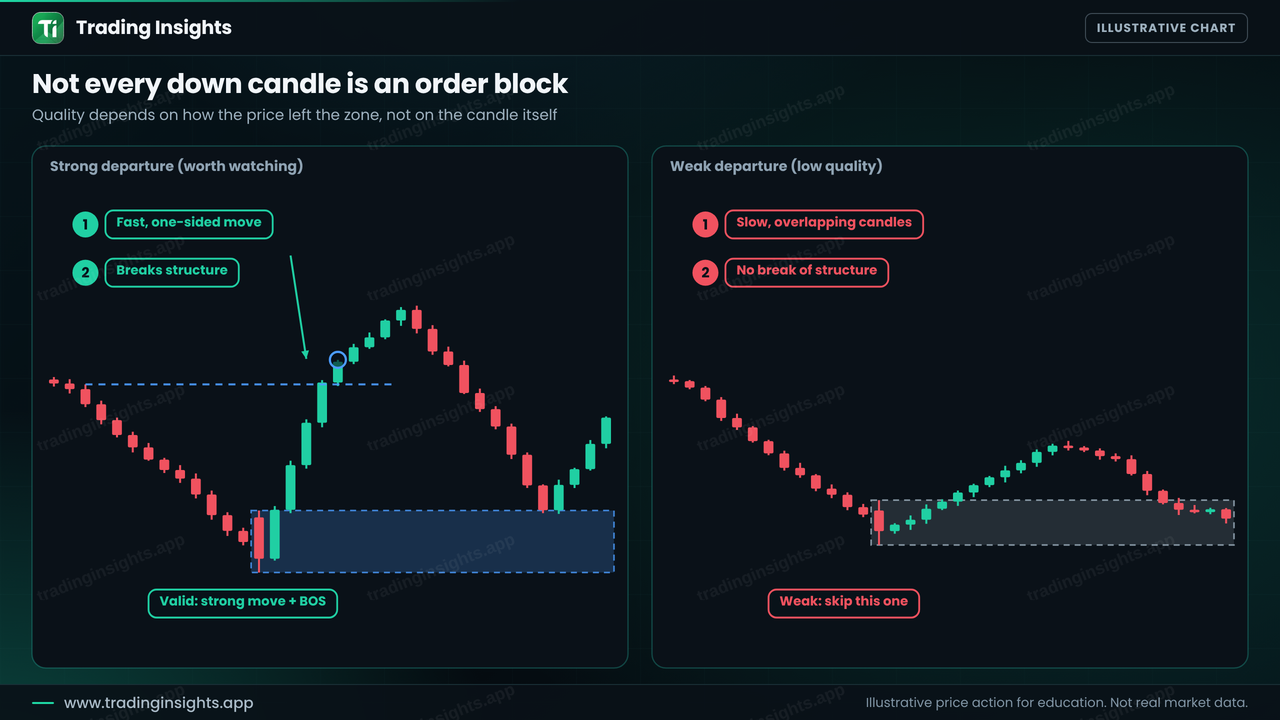
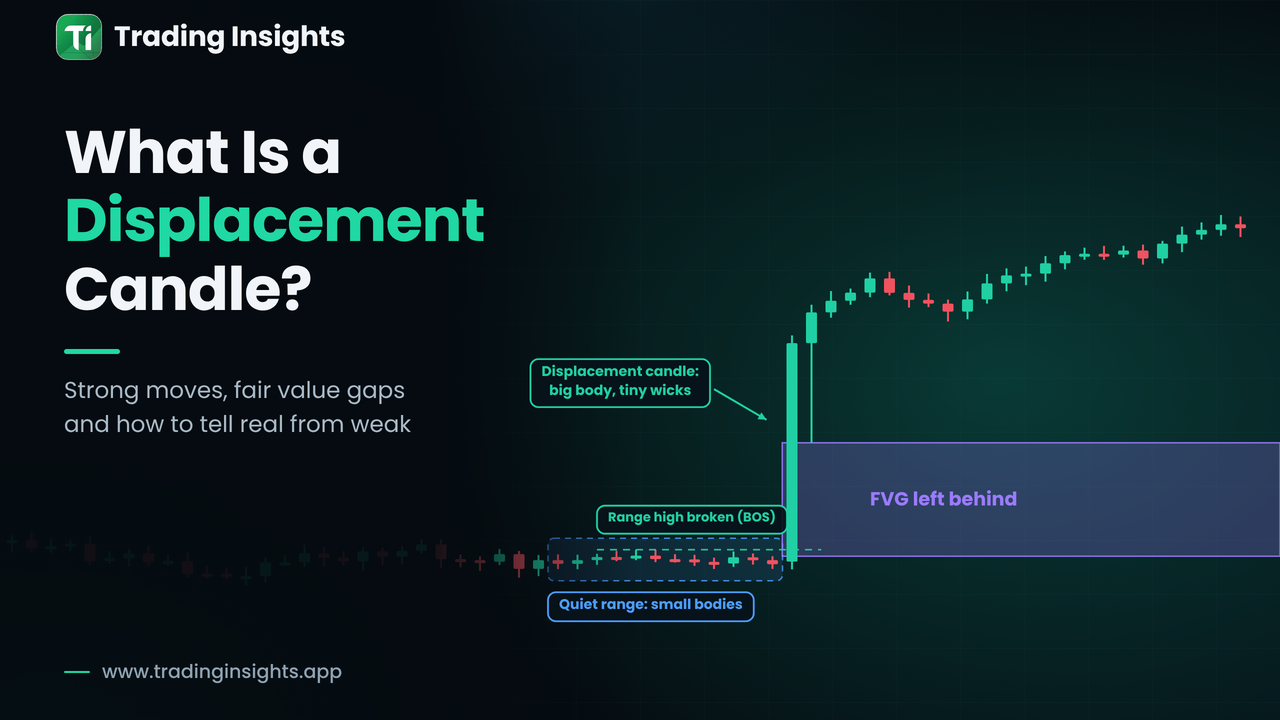
- Strong departure: large candles with small wicks that leave the zone quickly. See what a displacement candle is.
- Structure break: the move closes beyond a swing high or low, which proves it had real force.
- Fresh zone: price has not returned to it yet. Zones that have already been tested several times are often treated with caution.
- Direction: an order block that agrees with the higher-timeframe trend is usually preferred. Learn to check this in top-down analysis.
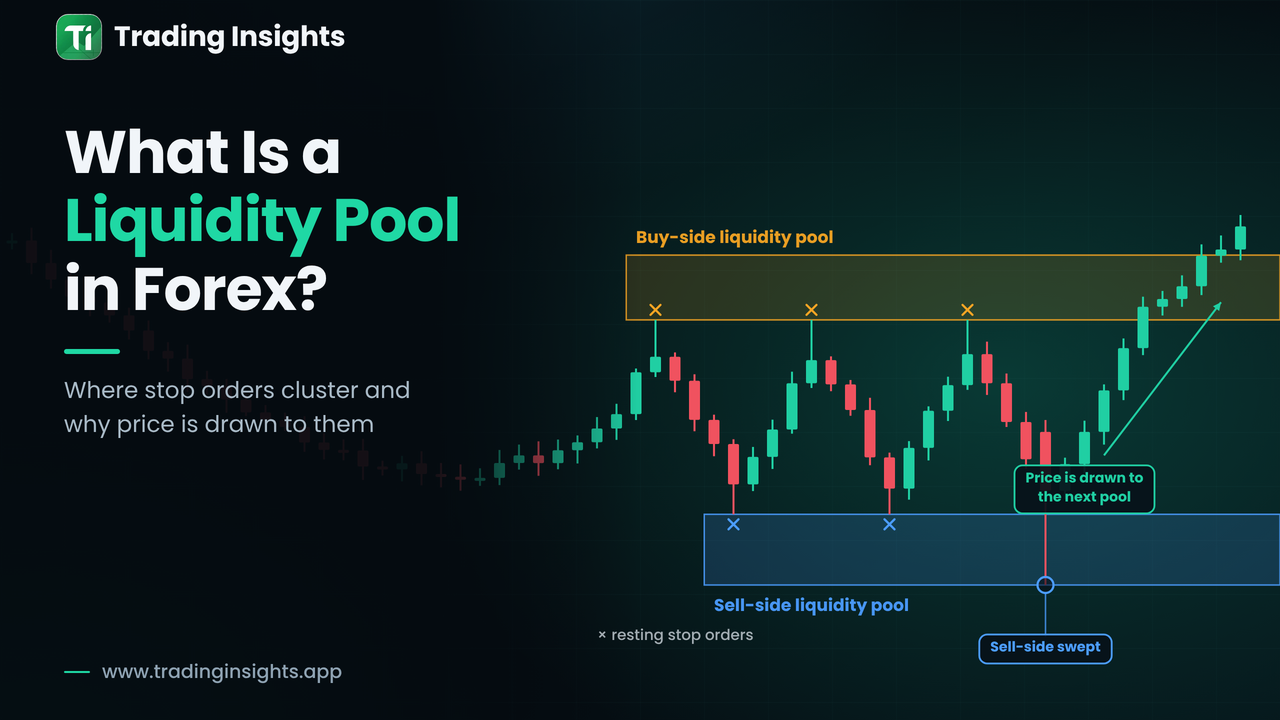
- Context: a move that started after a sweep of equal highs or lows has a clear reason to exist.
Trading a bearish order block: a worked example
Here is an illustrative plan for a bearish order block on EUR/USD, H1. A strong move down breaks the previous swing low. The last up candle before it, between about 1.0900 and 1.0916, is the order block. Price later rallies back to the zone.