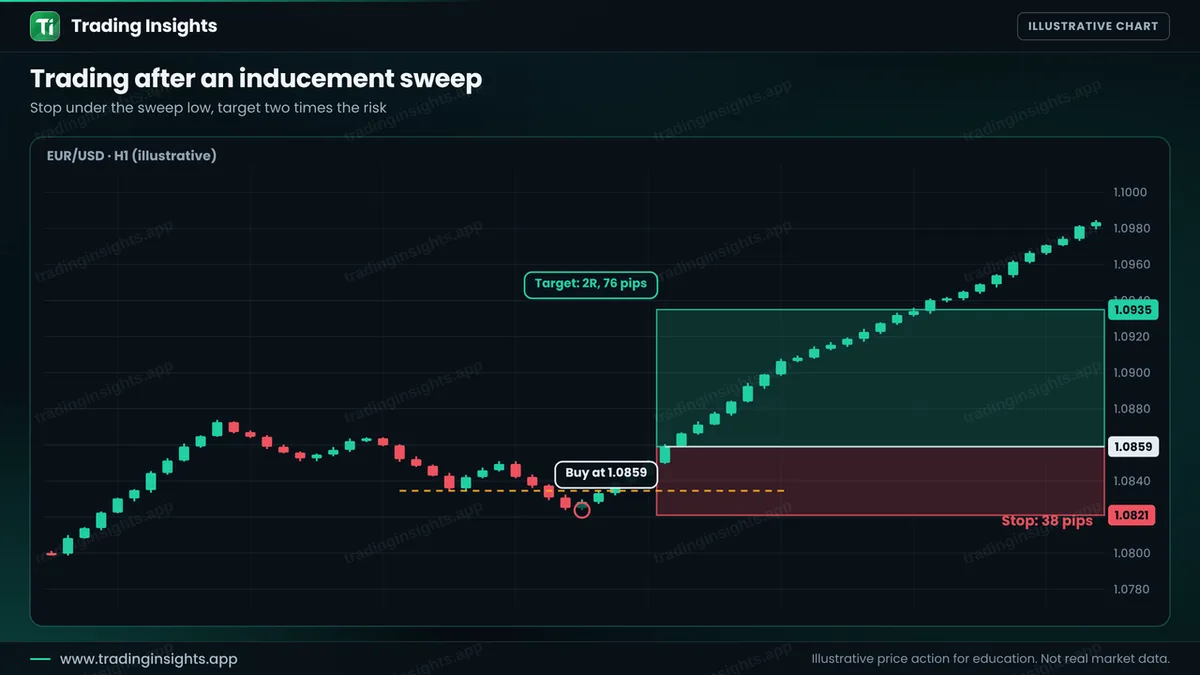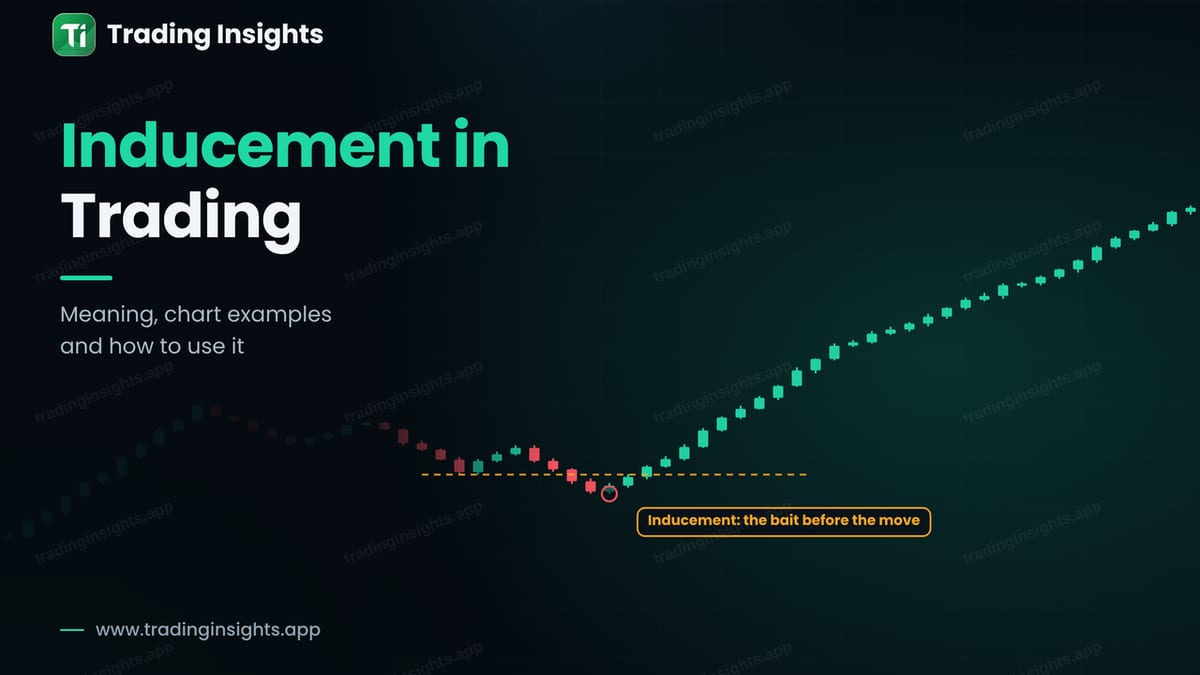
Inducement is a term for a minor high or low that tempts traders into acting too early. In an uptrend, a small low forms inside a pullback, and many buyers place their entries or stops around it. Price then dips beyond that low, triggers the orders, and only after that makes the larger move. The word comes from the idea that the market induces traders to take a position before the real move starts. This guide explains the meaning with a chart, gives a five-step checklist to use it with discipline, and walks through a trade plan with a stop and a target. It also covers the limits of the concept, since not every minor low is a trap.
What inducement looks like
Imagine an uptrend that pulls back. Along the way price makes a small low, a minor swing that looks like support. Traders see it, so they place buy orders near it, or they place their stops just below it. When price pushes below that minor low and quickly returns, those orders are taken, and the market is free to continue in the direction it wanted.
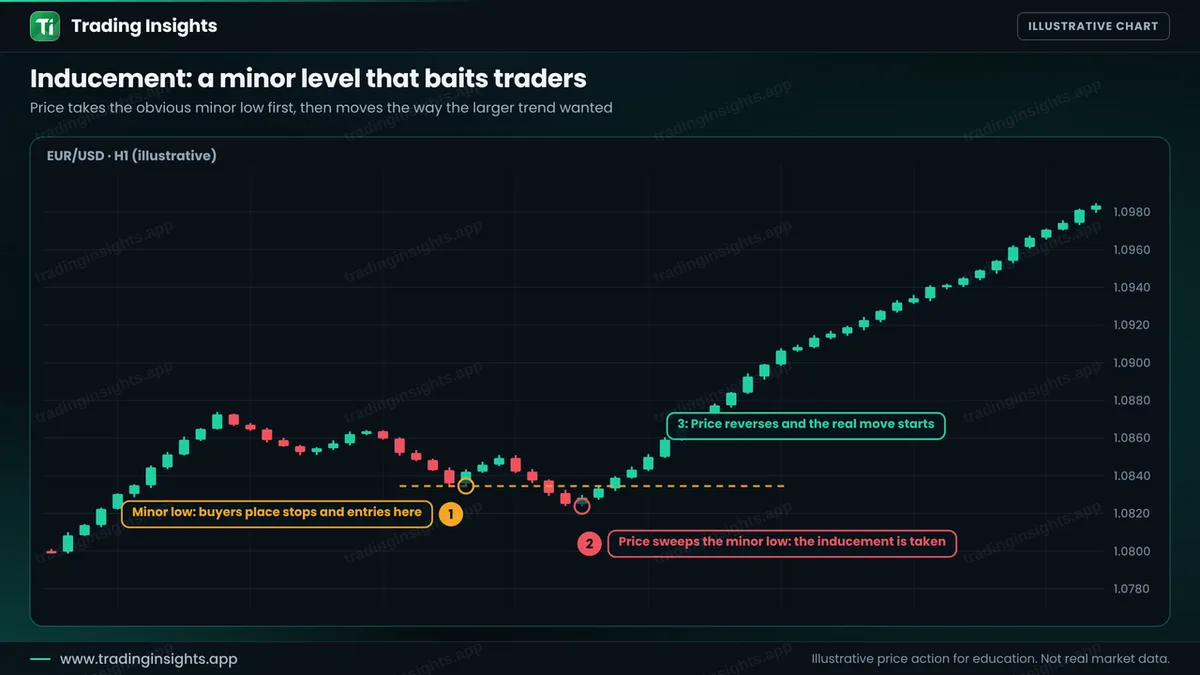
Two points matter. First, inducement happens inside a move, usually a pullback, and not at the major turning points. Second, it is only recognised after the fact. At the time, a minor low is just a minor low, and you cannot know if it will be taken. That is why inducement is a clue to be combined with other things, and not a signal by itself. The same logic at larger levels is explained in inducement vs liquidity sweep and in liquidity sweeps explained.
Why it matters
Inducement helps with two common problems. The first is early entries: buying at the first minor support, getting stopped out by a small sweep and then watching price go in the planned direction. The second is stop placement: a stop sitting just under an obvious minor low is easy to hit. If you understand where the obvious levels are, you can wait for them to be taken, or place your stop beyond them. It also fits with the idea of liquidity pools, since the minor level is a small pool of resting orders.
A five-step checklist
Use inducement as part of a plan, not as a reason to trade on its own. These five steps keep it disciplined.
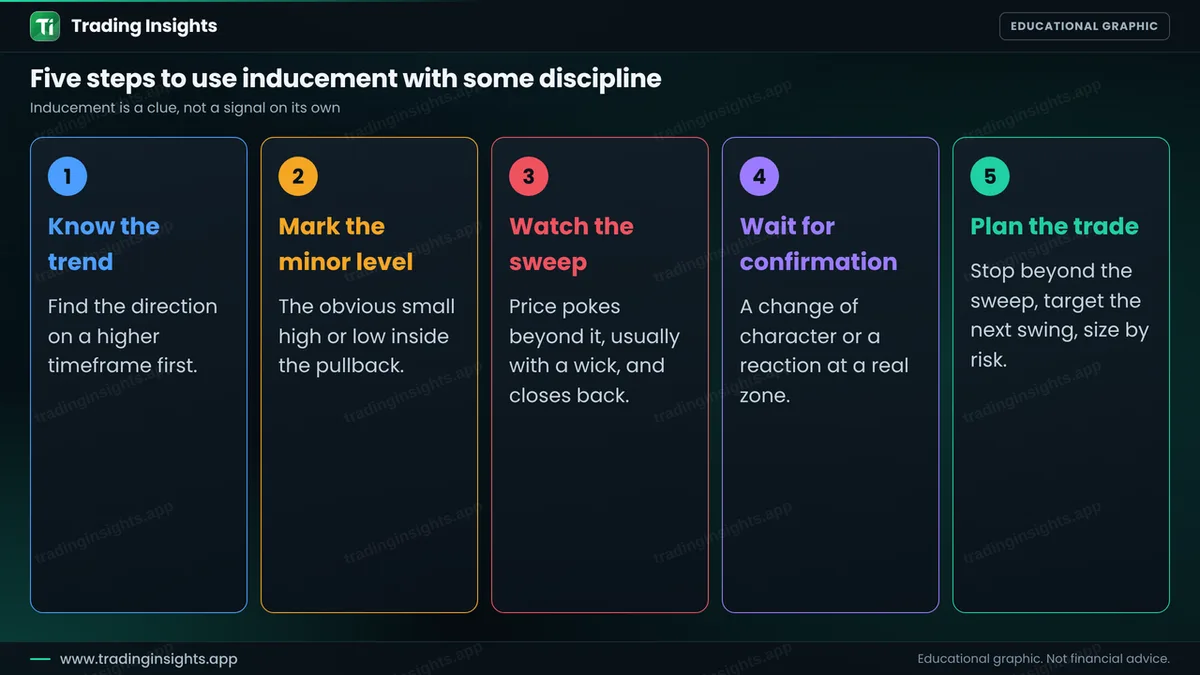
- Know the trend. Find the direction on a higher timeframe first, as in top-down analysis.
- Mark the minor level. The obvious small high or low inside the pullback.
- Watch the sweep. Price pokes beyond it, usually with a wick, and closes back.
- Wait for confirmation. A change of character, or a reaction at a real zone such as an order block.
- Plan the trade. Stop beyond the sweep, target the next swing and size by risk.