Inducement is a minor swing point inside a pullback that tempts traders to enter early, and price often trades through it before reaching a deeper zone. A liquidity sweep is when price takes out a more significant level, such as a major swing high or equal highs, and then closes back inside. Both involve price running stops, but they differ in scale, purpose and what usually comes next. Definitions vary between traders, so treat what follows as one common interpretation.
What is inducement?
Inducement happens during a pullback. Imagine an uptrend that has just made an impulse and is now retracing. Along the way price forms a small low. Buyers see it as a "higher low" and enter, placing stop-losses just under it. Price then breaks that small low, takes those stops and keeps falling toward a larger zone where the pullback was more likely to end. The minor low did its job as bait, which is where the name comes from.
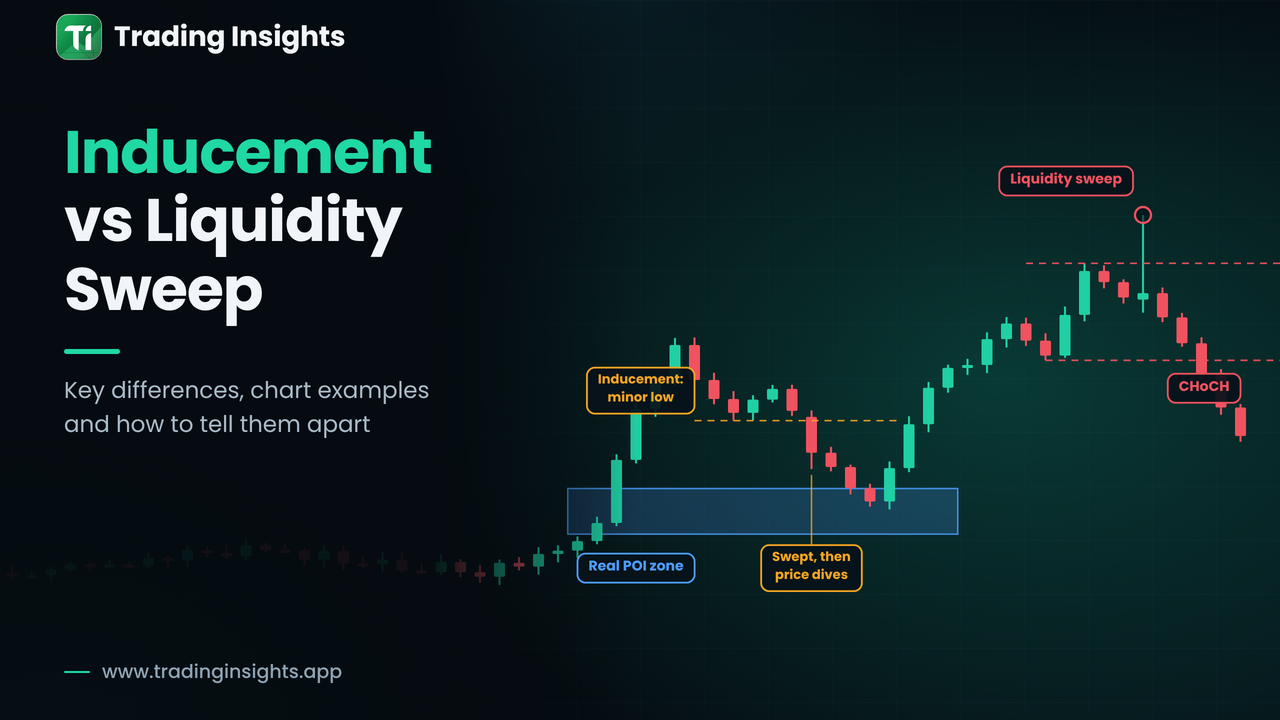
In the chart below, the orange dashed line marks the minor low created in the pullback. Price runs through it, reaches the blue base zone formed before the impulse, and only then reacts higher.
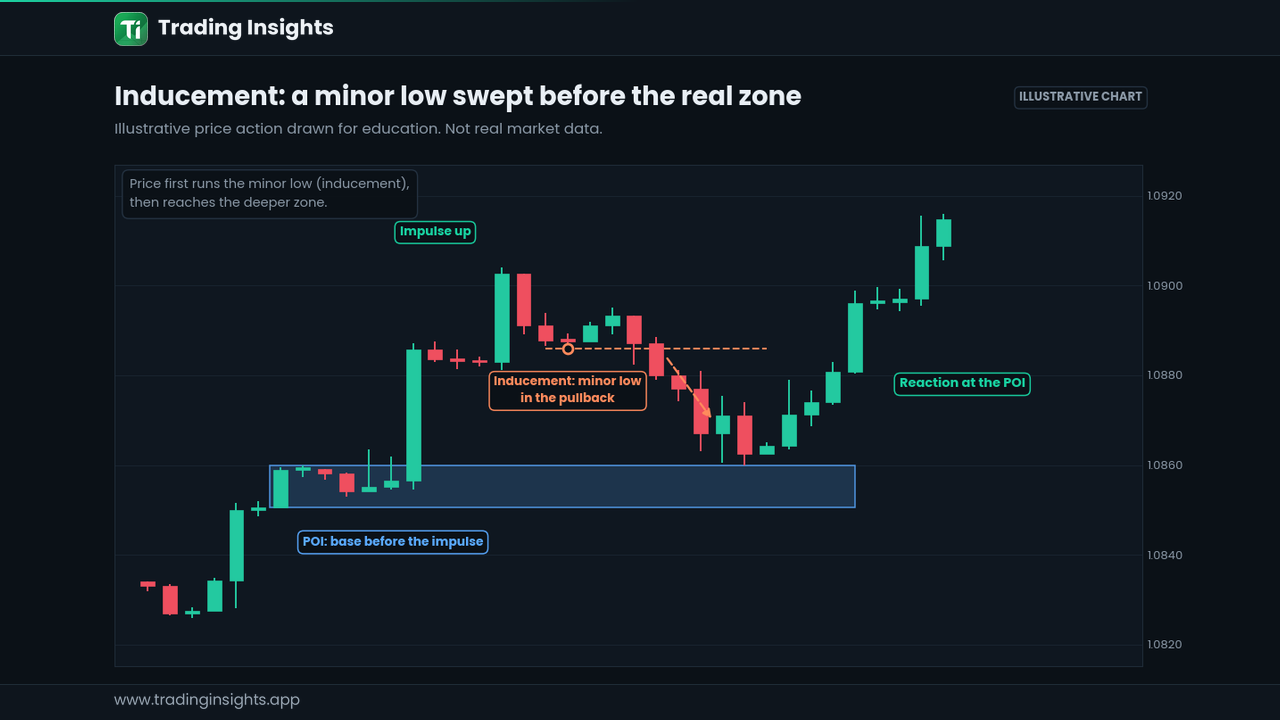
Figure 1: The minor low in the pullback is inducement. The real reaction comes from the deeper zone.
What is a liquidity sweep?
A liquidity sweep targets a level that more traders can see: a major swing point, a range extreme or a set of equal highs or lows. Price pushes through, triggers the resting orders and closes back on the original side. The wick shows the orders were collected, and the close shows that the break was rejected. The level-based logic is explained in what a liquidity pool is.
Here the market rallies to a major high, a long wick pokes above it, and the candle closes back below. A few candles later price closes under the last higher low, a change of character, and structure turns lower.
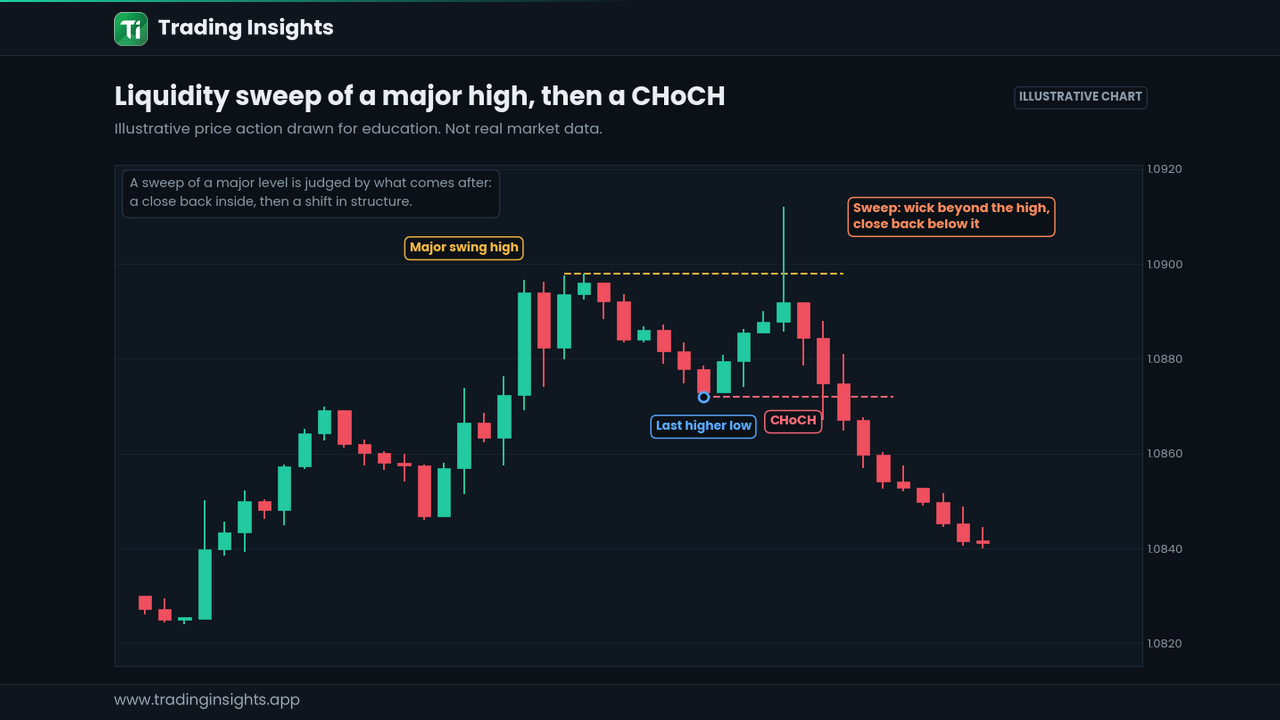
Figure 2: A sweep of a major high, then a close below the last higher low confirms a change of character.
Inducement vs liquidity sweep: the comparison
Question | Inducement | Liquidity sweep |
|---|---|---|
Which level is involved? | A minor swing inside a pullback | A major swing, range extreme or equal highs/lows |
Who is targeted? | Early entrants in the pullback | Traders with stops beyond an obvious level |
Where does it happen? | On the way to a deeper zone | At a significant boundary |
What often follows? | Continuation of the pullback to a zone, then reaction | A reversal or a large pullback, if structure confirms |
Typical confirmation | A reaction from the deeper zone | A close back inside and a structure shift |
How to tell them apart on a chart
Judge the scale. Is the level a small swing in a pullback, or a high or low that stands out on the timeframe?
Check the leg. Inducement lives inside a retracement. A sweep usually occurs at the end of a larger move.
Watch the close. A sweep shows a close back inside the level. Inducement just gets broken as price continues.
Look at structure afterwards. A sweep with a CHoCH suggests a shift. Inducement followed by a reaction at a zone suggests the original trend resumed. For the break labels, see what market structure is.
Putting the two together
They can appear in the same sequence. A market may run an inducement low, reach a zone such as an order block, and then sweep a major high before the next leg. Equal levels often serve as the target of the sweep, as covered in equal highs and equal lows. The skill is not naming each event perfectly but understanding which orders are likely being collected and what the market does next.
A simple checklist
Is the level minor or major on this timeframe?
Did price close back inside, or did it keep going?
Was the move fast and one-sided, or slow and overlapping?
Did structure change afterwards?
Where is my invalidation if the idea is wrong?
Common mistakes
Labelling every minor low as inducement without checking where the real zone is.
Treating each sweep as a guaranteed reversal.
Entering during the wick instead of waiting for a close.
Overlooking the higher-timeframe trend, which can make a sweep a mere pullback.
Frequently asked questions
Is inducement just another word for a liquidity sweep?
Not quite. Both collect orders, but inducement is a minor trap inside a pullback, while a sweep targets a more significant level.
Can inducement and a sweep happen together?
Yes. A small low can be taken first, then a bigger level later in the same move.
Do these concepts work on every market?
The logic of stops resting behind obvious levels applies to any liquid market. Behaviour will still vary by instrument, session and timeframe.
This article is for education only and is not financial advice. Trading carries risk, and interpretations of these terms differ.