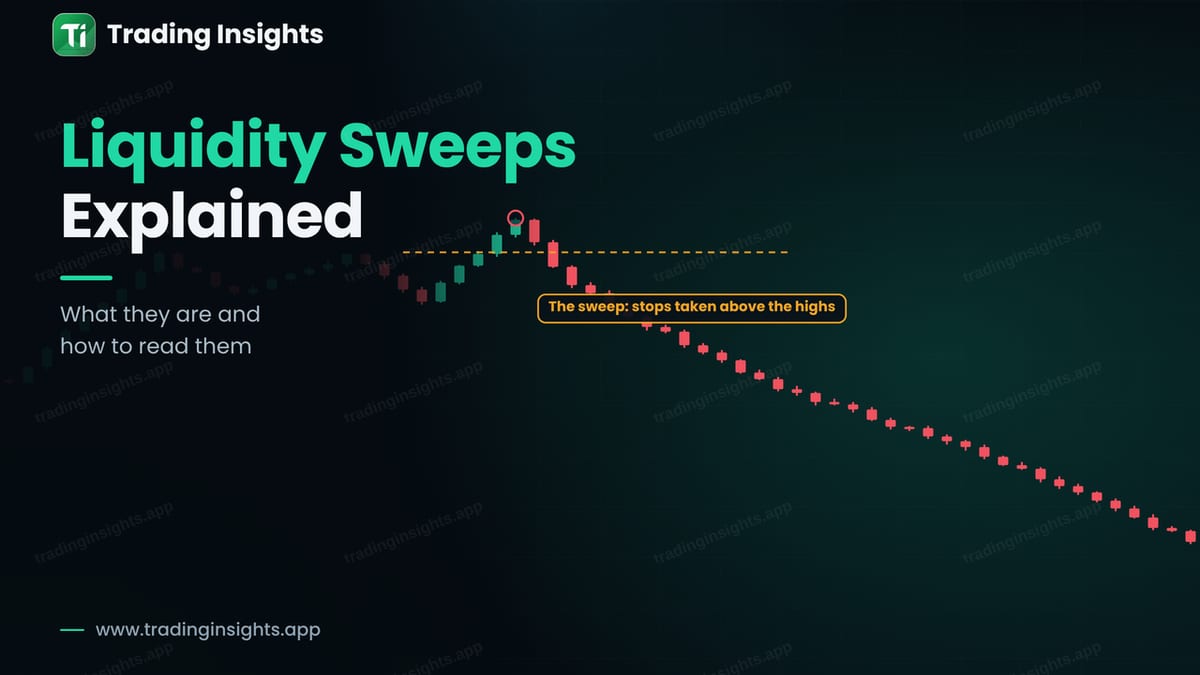
A liquidity sweep happens when price pushes past an obvious high or low, triggers the orders that sit there, and then returns inside the previous range. The orders include stop losses of traders who are positioned the other way and breakout entries from traders who expect a continuation. Many traders call it a stop hunt, but the neutral way to see it is as price visiting a place where many orders are waiting. This guide explains how a sweep looks, how to tell it apart from a genuine breakout, and how to plan a trade with a stop and a target.
What a sweep looks like
Look for a level that many traders can see: equal highs, equal lows, a prior day high, or a clear swing point. Price moves beyond the level, often with a long wick, and then closes back inside the range. That quick return is the signature of a sweep.
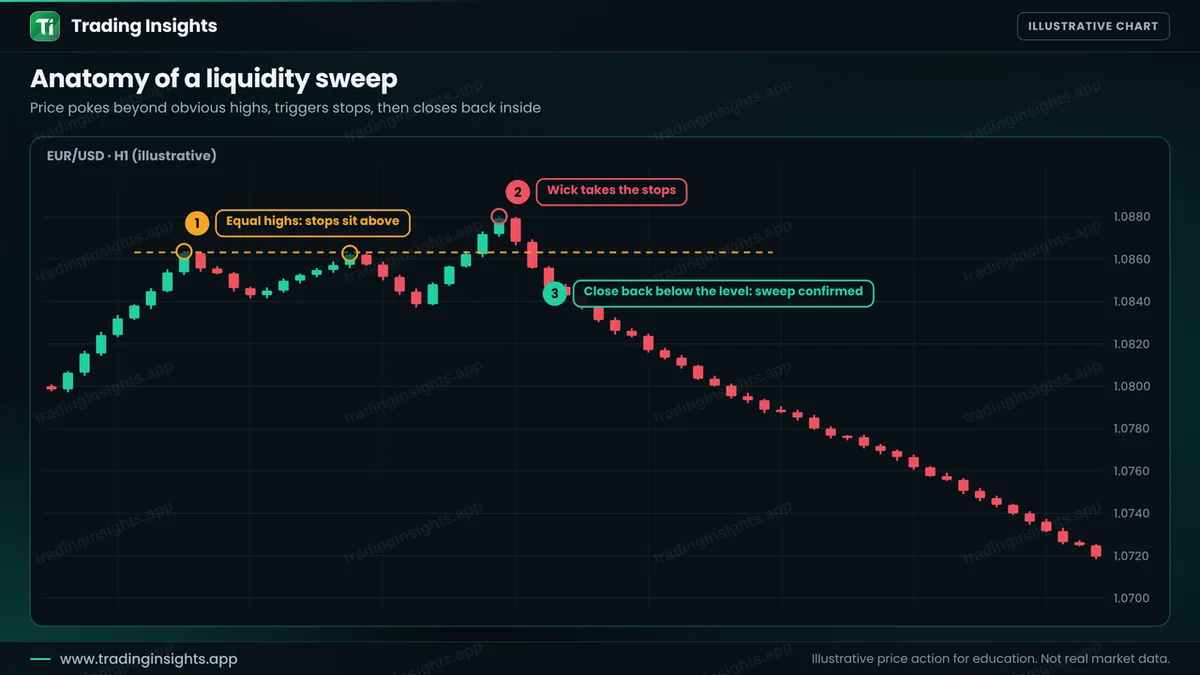
The levels exist because of how people trade. Buyers place stops below lows and sellers place stops above highs, and breakout traders place entries beyond them. Together they form a pool of liquidity. A sweep is price reaching that pool. For a smaller version inside pullbacks, see inducement.
Sweeps work in both directions
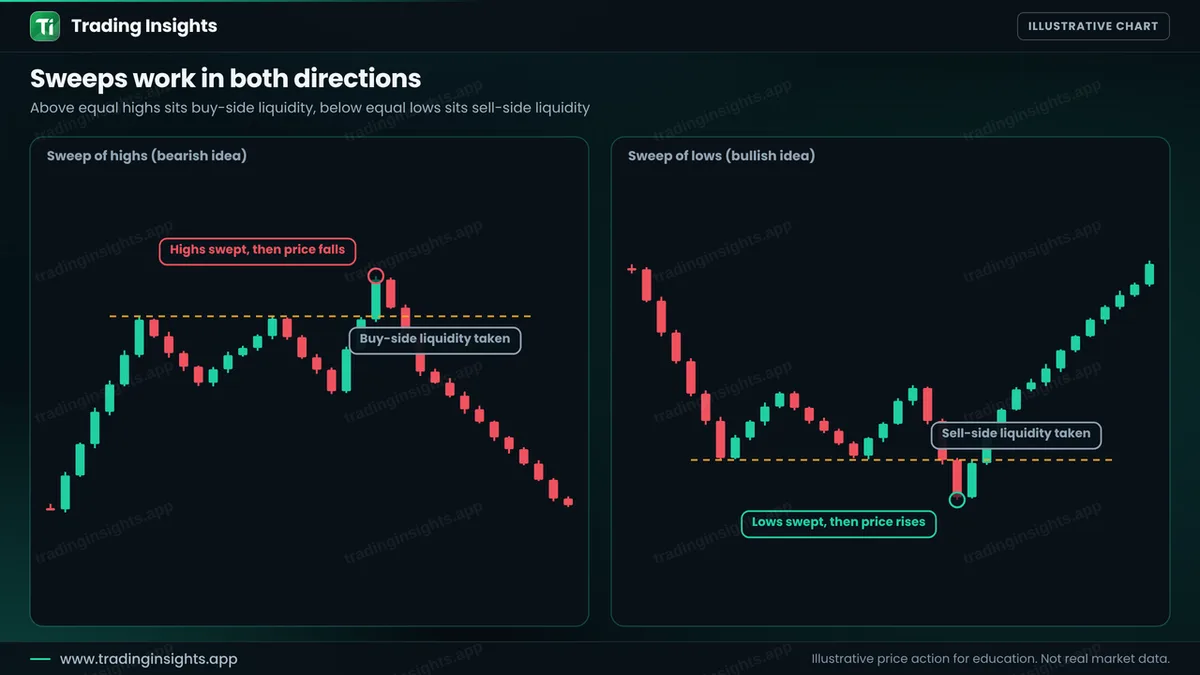
Above equal highs sits buy-side liquidity. A sweep of it, followed by a close back below, is a bearish idea. Below equal lows sits sell-side liquidity, and a sweep of it followed by a close back above is a bullish idea. The same logic works with any clear level, and the importance of the level matters: a sweep of a daily high is a stronger event than a sweep of a small intraday wiggle.
Sweep or real breakout?
The difficult part is that at the time of the move you cannot know the outcome. What you can do is to wait and see how price behaves after the break.
- Sweep: price spikes beyond the level, then closes back inside quickly, often within one to three candles, and then makes a move in the other direction.
- Breakout: price closes beyond the level and holds there, often retesting the level from the other side. See how to trade breakouts and break of structure.
This is why traders wait for the close. A wick through a level costs nothing, but a close beyond it is a statement.
Trading a sweep: worked example
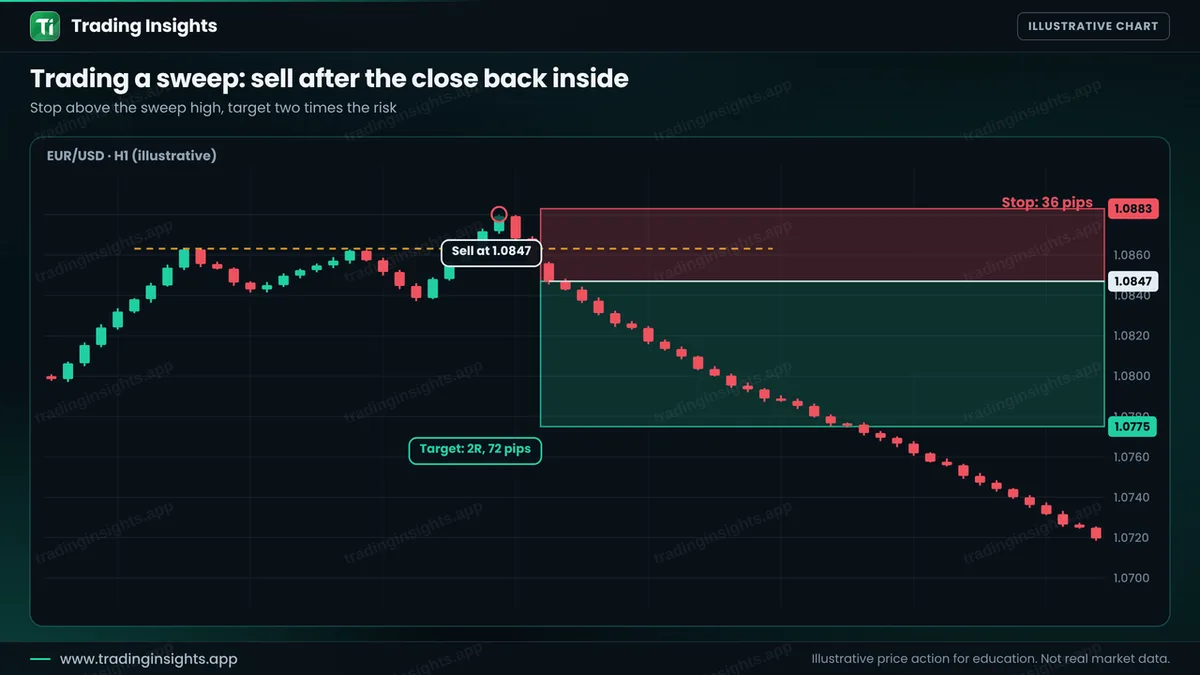
This is an illustrative sell on EUR/USD, H1. Price makes equal highs, spikes above them and closes back below. You sell after the close back inside, place the stop above the sweep high and target twice the risk.