
Non-farm payrolls (NFP) is the monthly US jobs report, and it is one of the data releases that most often moves forex. It shows how many jobs the US economy added, along with unemployment and wages, and it feeds expectations for Federal Reserve interest rates. A surprise can move the dollar, gold and stocks within seconds, so it pays to know what the report contains and how to protect your account around it.
What is the non-farm payrolls report?
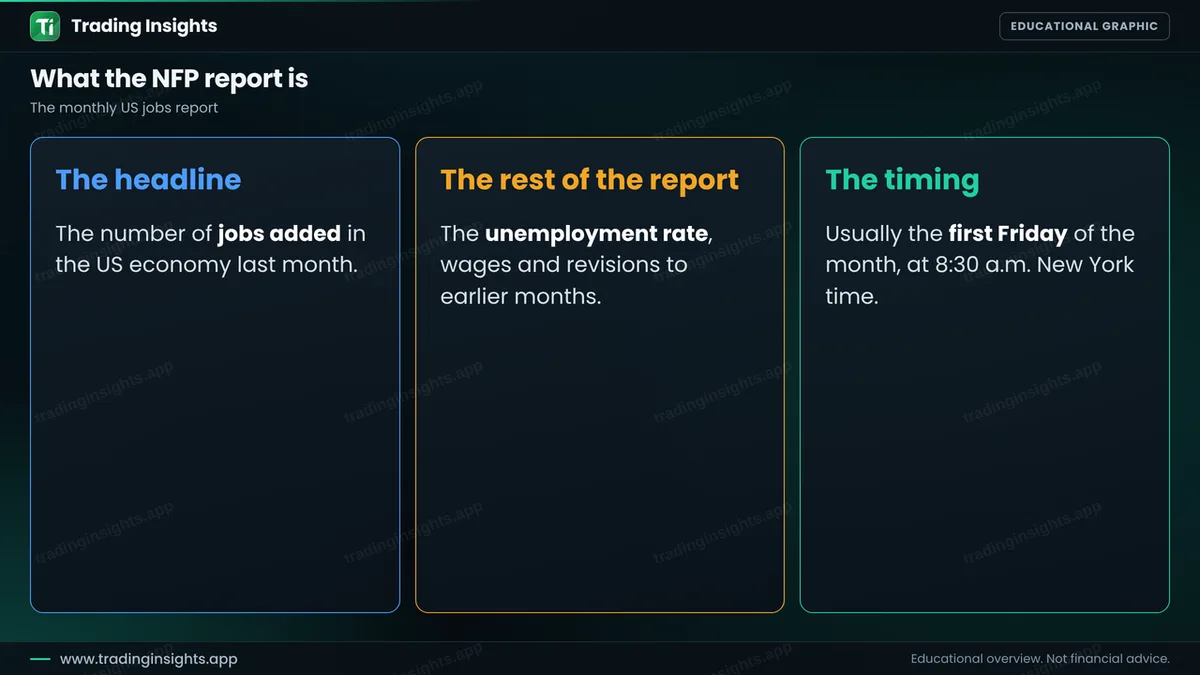
The headline is the number of jobs added to the US economy in the previous month, excluding farm workers and some other categories. The same release shows the unemployment rate, average hourly earnings (wages) and revisions to the previous two months. It is usually published on the first Friday of the month at 8:30 a.m. New York time, but check the calendar for the exact date.
The Federal Reserve watches the labor market closely, so the data influences rate expectations. See central banks and forex and trading forex news for the general method.
How NFP moves forex
As with all data, the market compares the number with the forecast. A strong result can support the dollar, since it suggests the economy is solid and rates may stay higher. A weak result can weigh on the dollar. But the headline is only a part of the story.
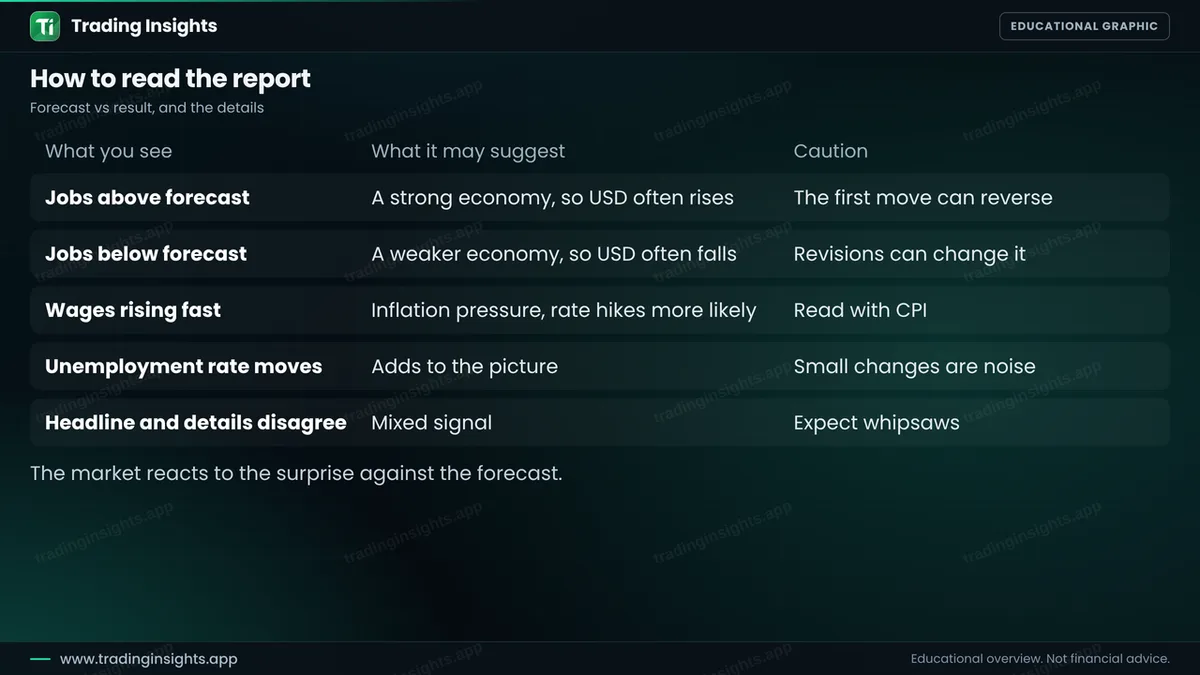
- Wages. Fast wage growth can raise worries about inflation and make rate hikes more likely. See inflation and forex.
- Revisions. Changes to earlier months can outweigh the new number.
- Unemployment rate. A small move is noise, and a large one is a signal.
- Conflicting details. If the headline is strong and wages are weak, the first move can reverse within minutes.
The effect also depends on context. When the market fears inflation, strong jobs can mean more rate hikes, and the dollar rises. When it fears a slowdown, a weak number can raise worries about the economy, and the reaction can differ. See interest rates and forex.
How to trade NFP: a plan
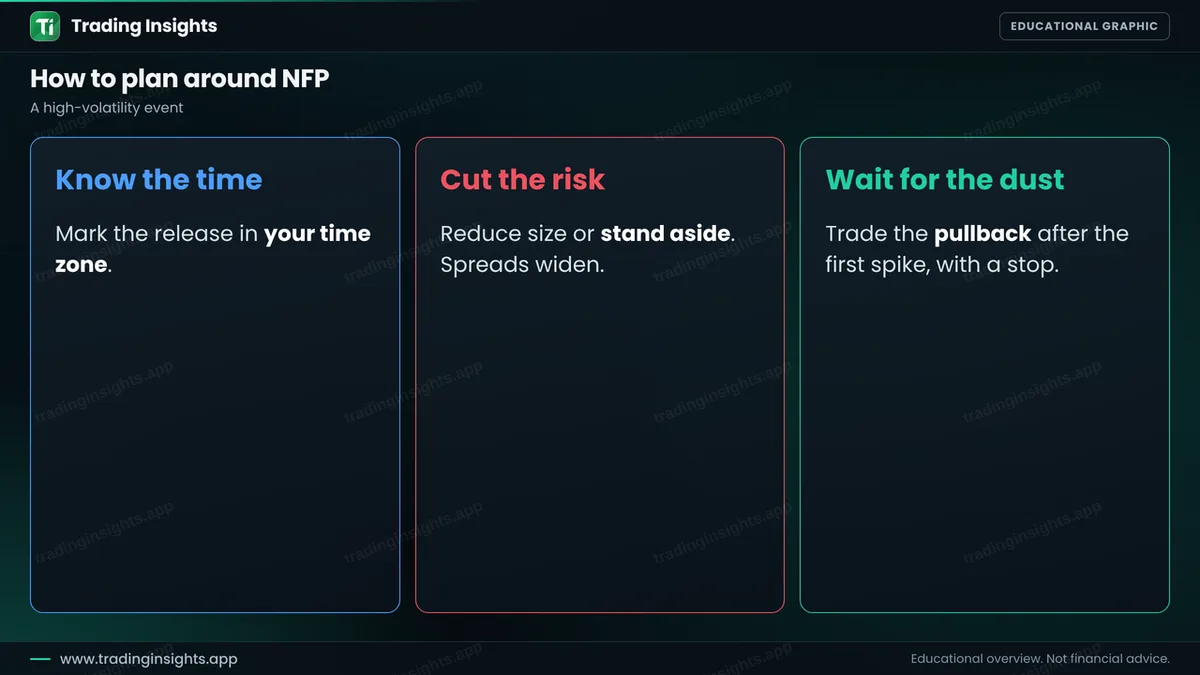
- Know the time. Convert the release time to your own time zone, and mark it on the calendar.
- Cut the risk. Use smaller size or stand aside. Spreads widen, and slippage grows. See slippage and forex volatility.
- Do not hold tight stops through it. A spike can hit them and then reverse.
- Wait for the dust. Many traders wait for 15 to 30 minutes, and then trade a pullback to a level with a clear stop. See break and retest.
- Check the other markets. Gold and US stocks often move with the dollar. See the gold guide.
An example in words
Suppose the market expects 180,000 new jobs, and the report shows 260,000, with wage growth above the forecast. Within a minute, EUR/USD drops 50 pips as the dollar jumps. A trader who was long EUR/USD with a 25-pip stop is out at once.
Ten minutes later, price rebounds, because the unemployment rate rose slightly and earlier months were revised down. A trader who waited saw that the first move was only half of the story. The numbers are made up, but the sequence is common.
Illustrative example: waiting and then trading the pullback
This is an illustrative example, not a real trade. After the spike above, EUR/USD settles and retests a support level. The trader buys at 1.0800 with a stop at 1.0770 (30 pips) and a target at 1.0860 (60 pips), a 1 to 2 ratio.
With a $10,000 account risking 1% ($100), the position size is $100 / (30 pips x $10 per pip per lot) = about 0.33 lot. A win pays about $200, and a loss costs about $100.
The trader chose a normal size after the spike, not a larger one to make up for missing the first move. If spreads are still wide, the stop may need extra room, which means a smaller size.
What to watch besides the headline
Before the release, look at the forecast and the previous number, so you know what the market expects. After it, check the wage figure and revisions within the first minute. They often explain why price reverses.
Also notice how the next sessions treat the level. If price holds above or below the post-news range, the reaction may continue. If it returns inside the range, the spike may have been noise.
Common mistakes
- Entering in the first seconds. Spreads are widest and fills are poor. Wait for the first move to settle.
- Reading only the headline. Wages and revisions can reverse the move. Check them before acting.
- Holding a large position through the release with a tight stop. A spike can stop you out and then reverse. Cut the size or stay out.
- Forgetting that the report moves many dollar pairs at once. Several trades can become one big bet. See currency correlation.
Frequently asked questions
What is NFP?
It is the monthly US jobs report. The headline is the number of jobs added, excluding farm workers and some other categories.
When is NFP released?
Usually on the first Friday of the month at 8:30 a.m. New York time. Check the economic calendar for the exact date.
Why does NFP move the dollar?
It shows the health of the US labor market, which affects expectations for Federal Reserve interest rates. A result far from the forecast changes those expectations quickly.
Should I trade NFP?
It is risky because of wide spreads and sharp spikes. Many traders cut the size or wait for the first reaction to settle. Standing aside is also a valid choice.
Your next step
Mark the next NFP date on your calendar, and write down your plan: trade or stand aside, what size, and what you will wait for. Use the risk reward calculator to check any post-news setup before you click.
This is education, not financial advice. Trading carries risk, and news releases can cause fast losses and slippage. The charts are illustrative and not real market data.


