
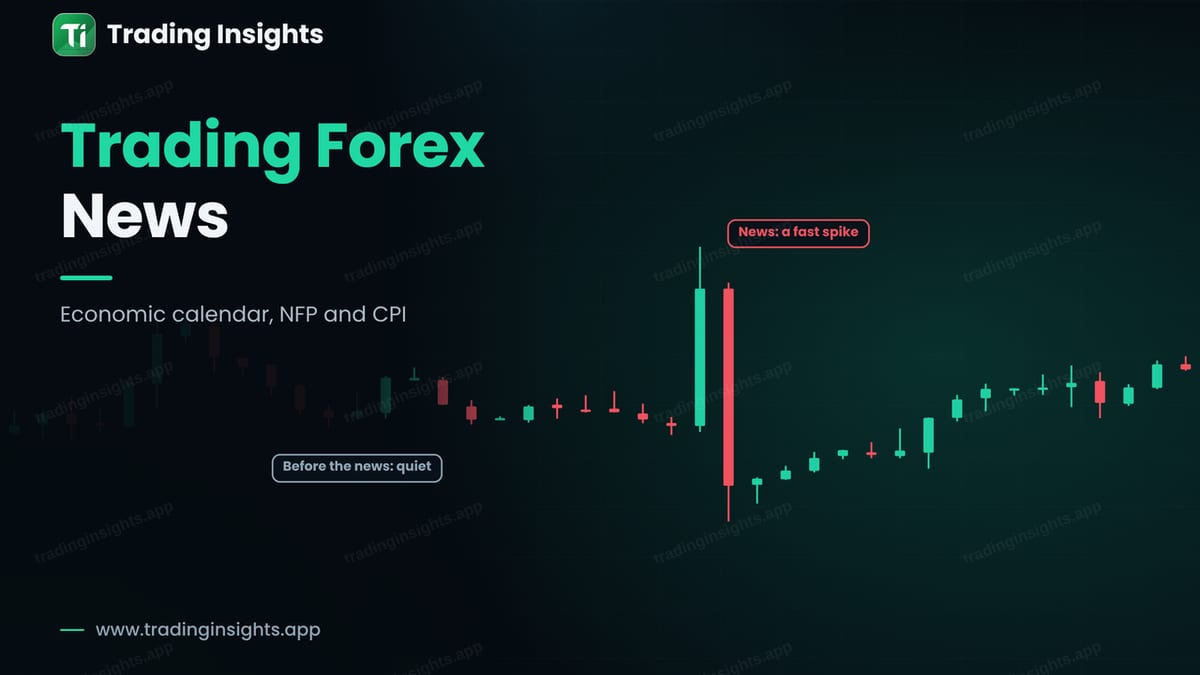
Some of the biggest moves in forex happen in a few seconds, right after a data release. Reports such as the US Non-Farm Payrolls (NFP) and the Consumer Price Index (CPI), or a central bank decision, can move prices by many pips. This article explains how to read the economic calendar and how to handle these events without taking wild risks. It is educational, and trading news is risky.
What is the economic calendar?
The economic calendar is a list of scheduled data releases and events, with the time, the currency, the importance and three numbers: the forecast, the previous value and the actual value. It is free on many websites and in many trading platforms. Traders check it before the week and before each day.
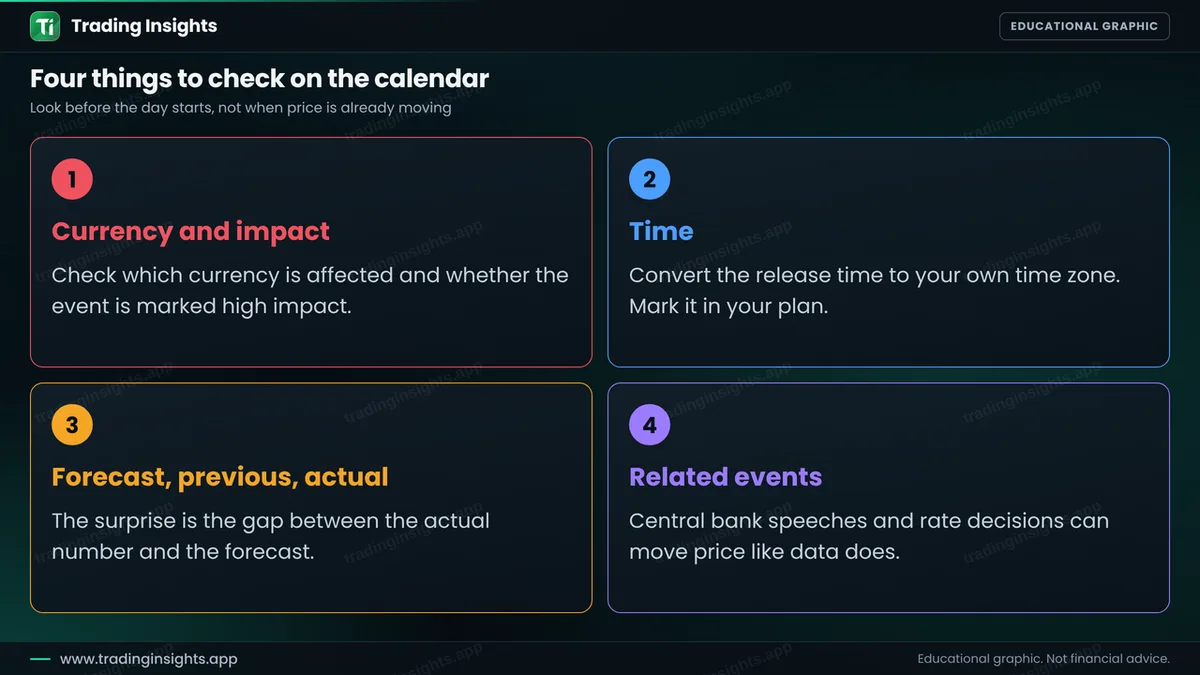
The important idea is the surprise. Markets already expect the forecast, so the price moves when the actual number differs from it. A number in line with the forecast may cause little reaction, even if the number itself is big.
Common high-impact events
- Non-Farm Payrolls (NFP). A US jobs report, usually released on the first Friday of the month.
- CPI. A measure of inflation. It affects the expectations for interest rates.
- Central bank decisions. Rate decisions and press conferences from the Fed, ECB, BoE and others.
- GDP and retail sales. They show the strength of the economy.
Not every event matters for every pair. A US report affects the dollar, so it matters most for pairs with USD, such as EUR/USD.
What a news release looks like
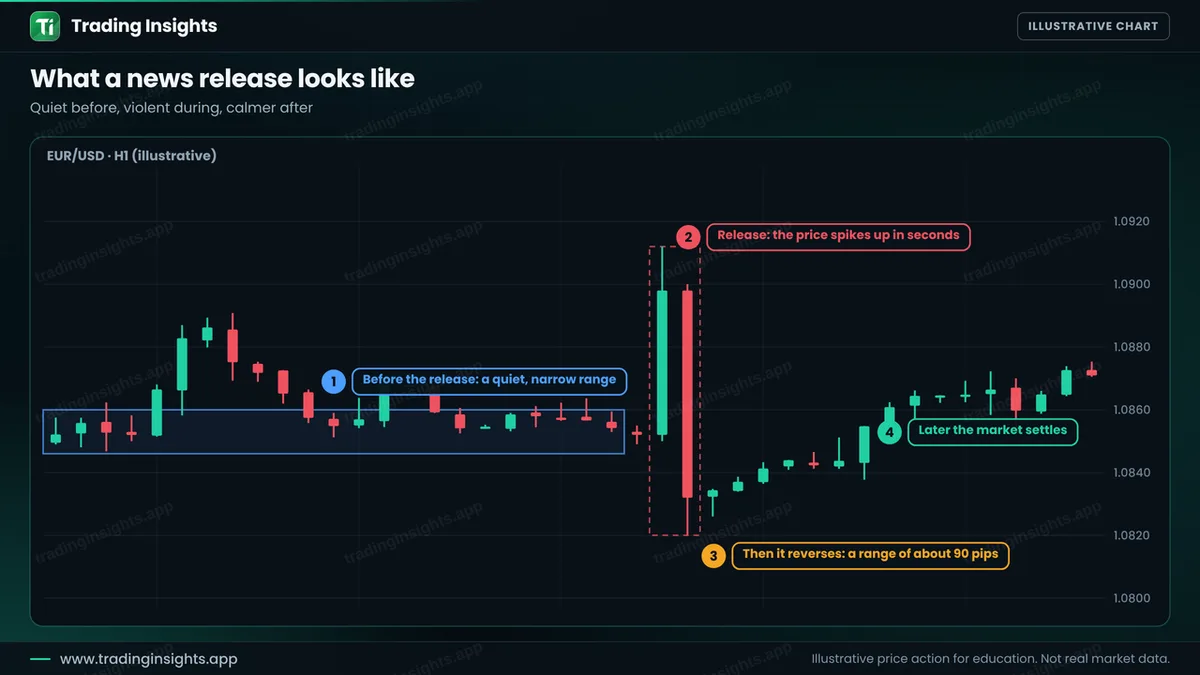
The pattern is common. Before the release, price often stays in a narrow range, because many traders wait. When the number comes out, price spikes in one direction in seconds, sometimes reverses, and then settles. During this time the spread widens, orders slip and stops can be hit at bad prices. See slippage and forex trading costs.
Three ways to handle news
- Stay out. Close or skip trades before high-impact news. This is the simplest and safest choice for beginners.
- Reduce risk. If you hold a trade, cut the size or move the stop to a safe place. Remember that stops can slip.
- Wait for the dust to settle. Let the first spike and the reversal pass. Then look for your normal setup on a calmer chart.
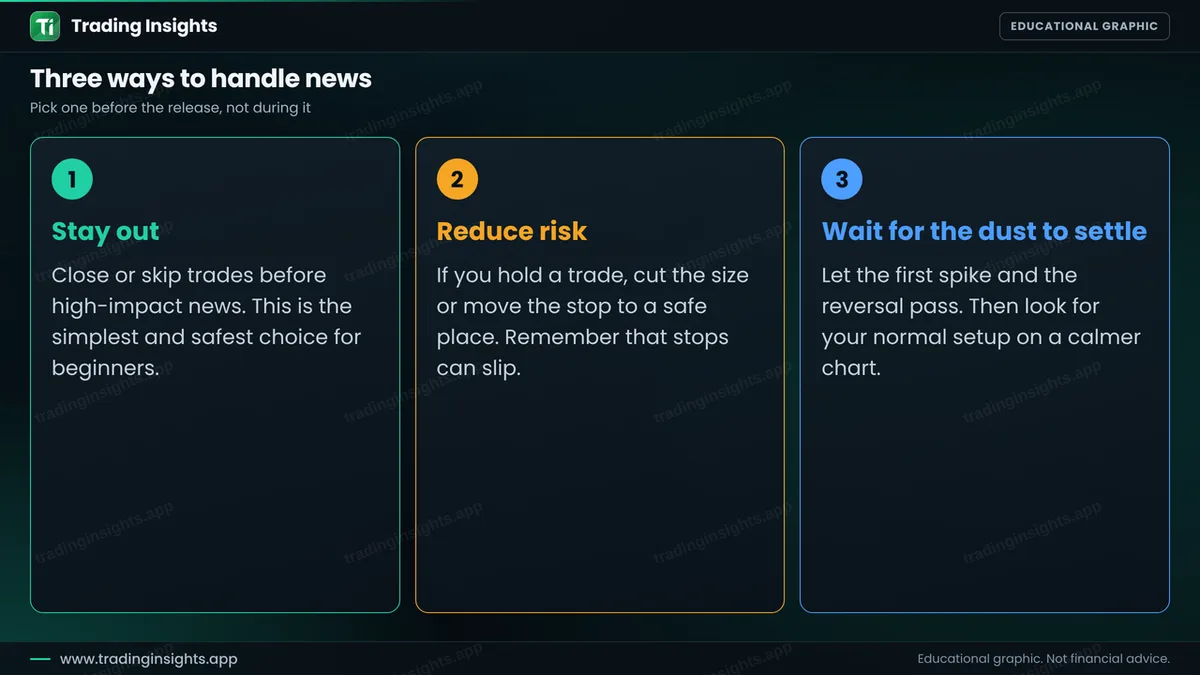
Most beginners do best with the first or the third. Trying to catch the spike is a gamble, because the direction is unknown, the spread is wide and the fills are poor.
A simple news routine
- Check the calendar each morning. Mark the high-impact events for your pairs, in your own time zone.
- Decide in advance. Write what you will do: stay out, reduce or wait.
- Close or protect trades. Do this before the release, not during it.
- Wait. Give the market time to settle, often 15 to 30 minutes or more.
- Return to your plan. Use your normal setups, for example the London breakout, when the chart is calm. Check the forex trading sessions too.
Common mistakes
- Opening a large trade a few seconds before the release.
- Ignoring the calendar and being surprised by a spike.
- Using a tight stop during news.
- Assuming that a good number means that the price must rise.
- Trying to win back a news loss at once. See revenge trading.
Frequently asked questions
What is NFP in forex?
NFP is the Non-Farm Payrolls report, a US jobs report released monthly. It can move the US dollar sharply.
Should beginners trade the news?
Most beginners are better off staying out or waiting for the market to settle, because spreads widen and fills can be poor.
Why does price sometimes fall after good news?
The market had already priced in the forecast, or traders take profit after the spike. The surprise, not the number itself, drives the move.
Where can I find the economic calendar?
Many brokers, trading platforms and financial websites offer a free calendar. Check that the times are in your time zone.
Trading involves risk. This is education, not financial advice. The charts are illustrative and not real market data. Trading carries risk, and no method guarantees results.


