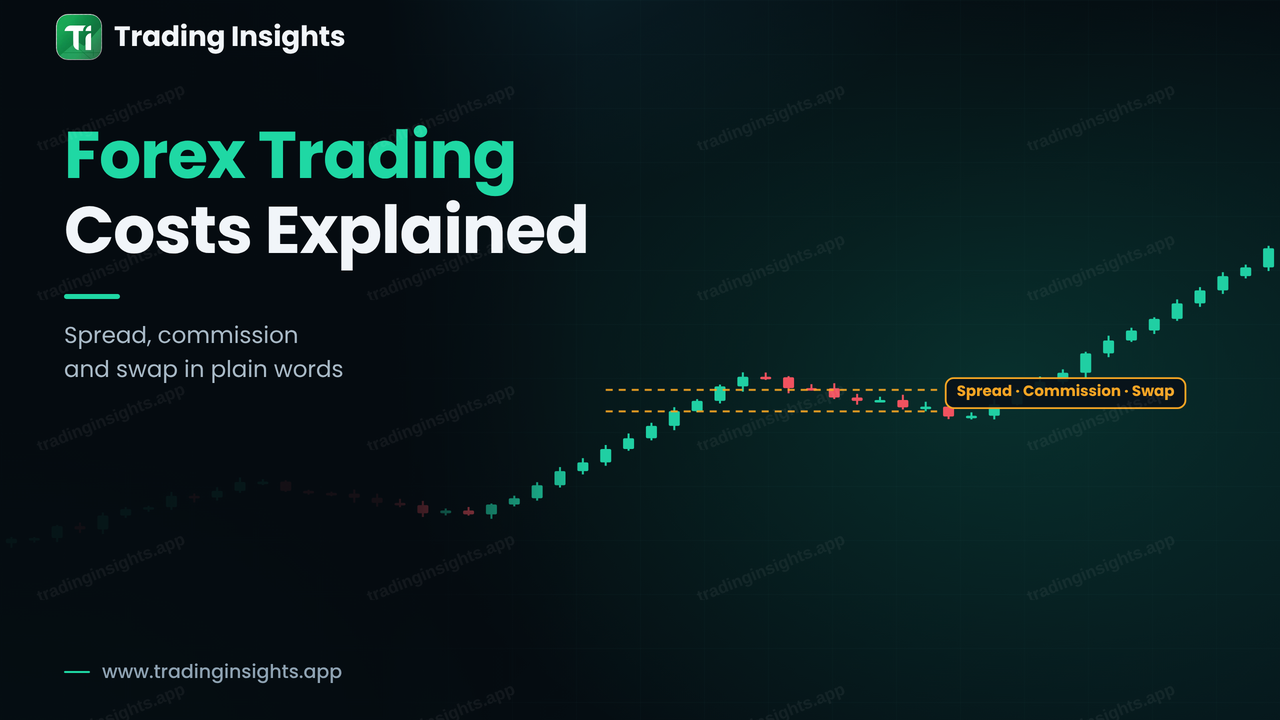
Every forex trade has a cost, and most of it is paid before the market has moved at all. The three main costs are the spread, the commission and the swap. Together they decide how far price has to move in your favour before you break even, and they matter more the shorter your timeframe is. This guide explains each cost in plain words, shows a full worked example in pips and dollars, and gives practical ways to keep costs down. Our complete beginner's guide to forex covers the basics if you are new to the market.
1. The spread: the gap between bid and ask
Every currency pair has two prices. The bid is the price at which you can sell, and the ask is the price at which you can buy. The ask is always a little higher than the bid, and the difference between them is the spread. It is the broker's built-in charge for the trade.
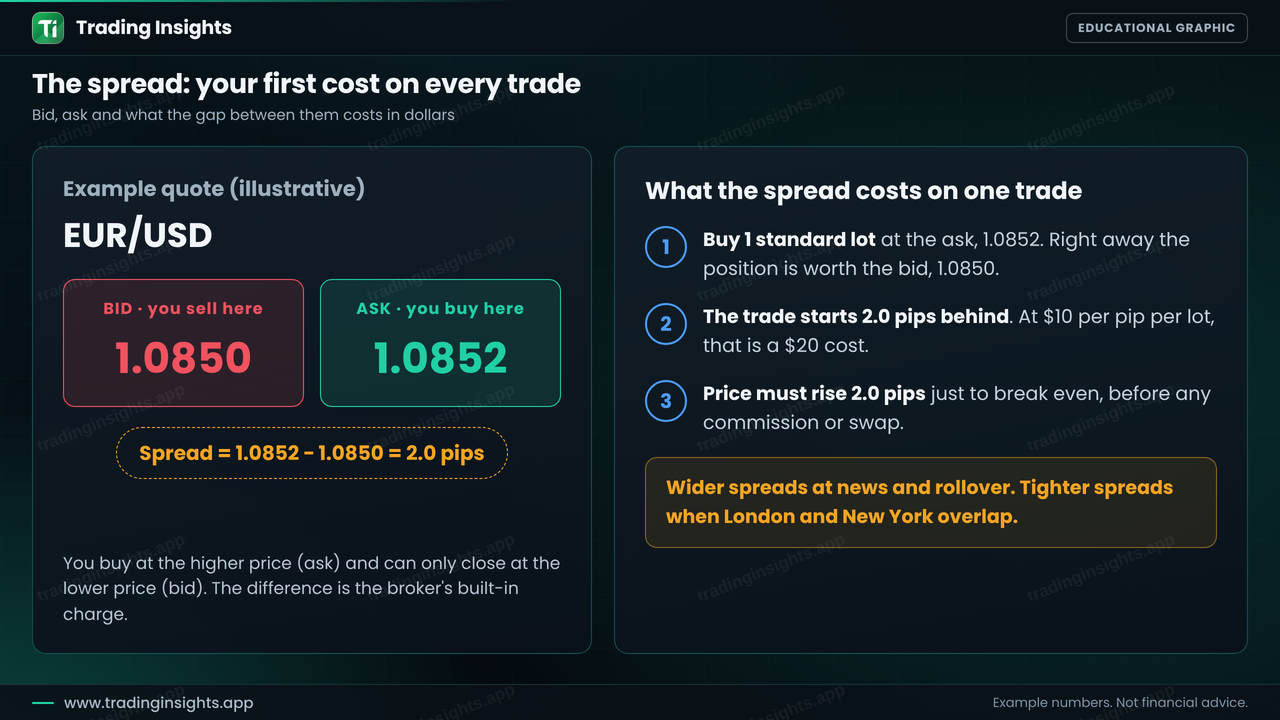
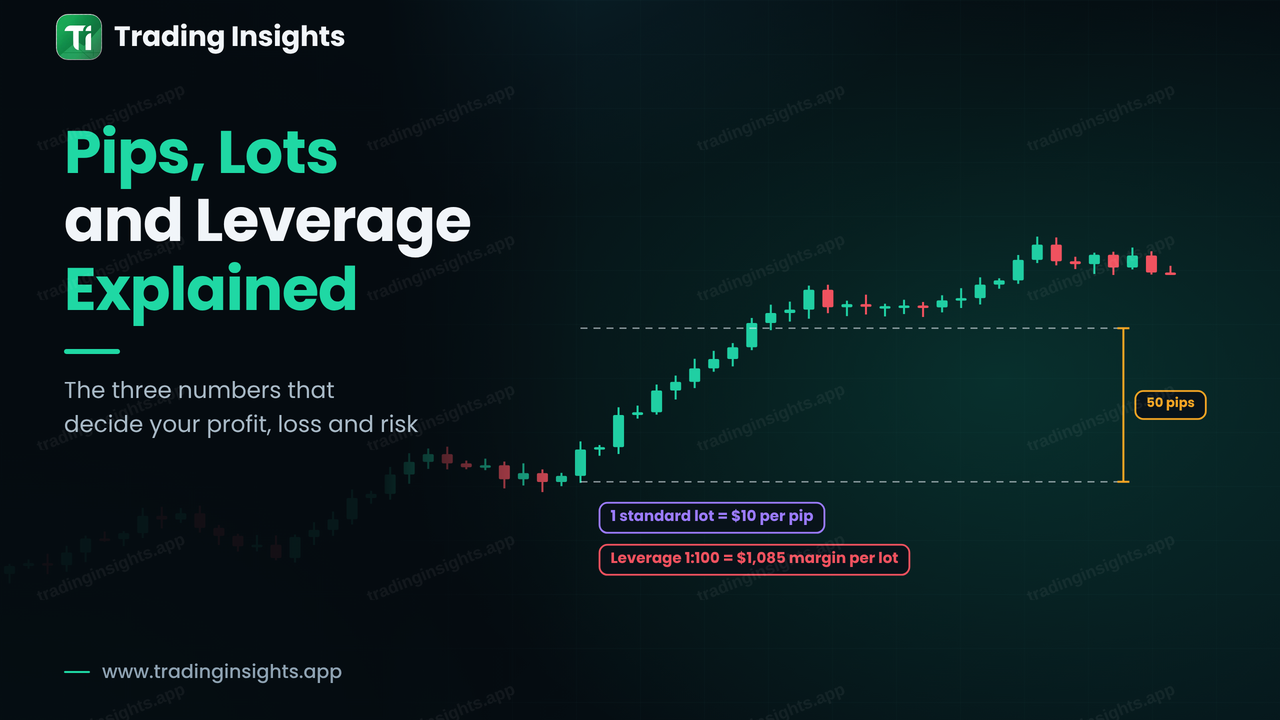
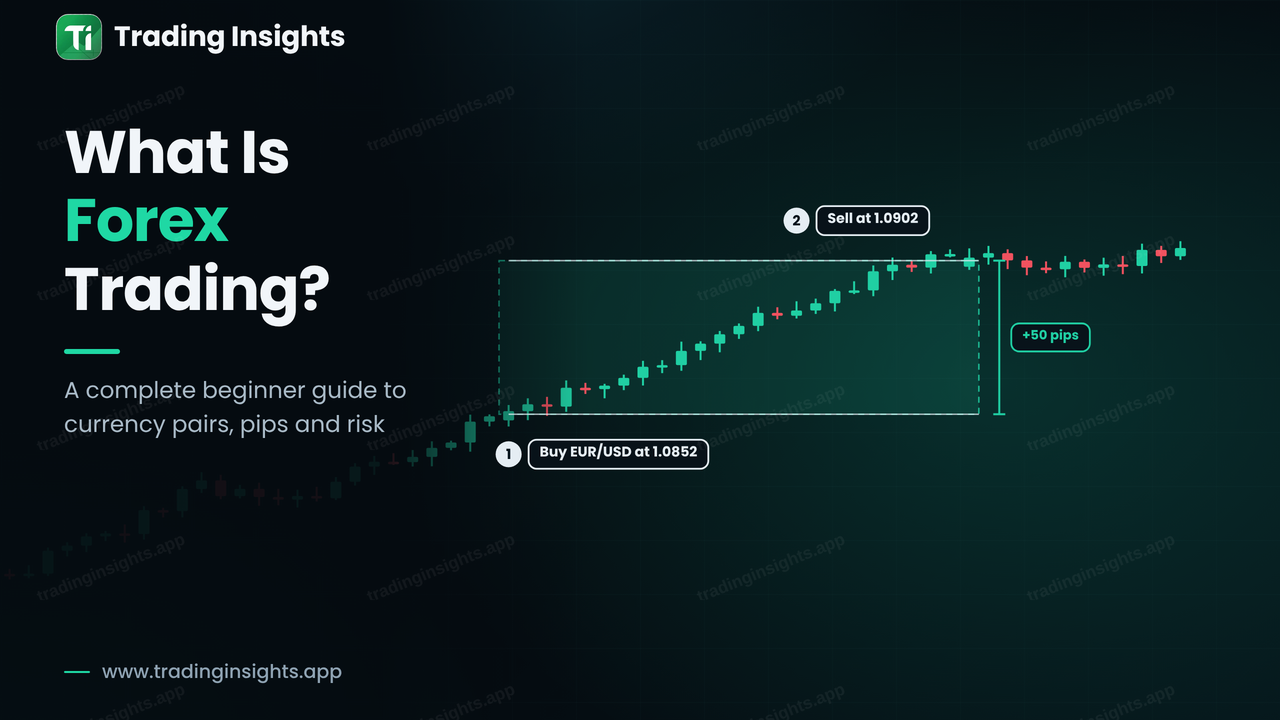
Say you buy 1 standard lot of EUR/USD at the ask of 1.0852. If you closed immediately, you would sell at the bid of 1.0850, a loss of 2.0 pips. At about $10 per pip per lot, that is $20. In other words, the trade starts 2.0 pips behind, and price needs to rise 2.0 pips just for you to break even. For more on pips and lots, see what pips, lots and leverage are.
Spreads are not fixed. They tend to be tighter during busy hours, especially when London and New York overlap, and wider during news releases, at the daily rollover and when markets are thin. The pair also matters: major pairs such as EUR/USD usually have the lowest spreads, and exotic pairs have much higher ones. See forex trading sessions explained for when liquidity is highest.
2. Commission: a separate fee per trade
Some accounts add a commission on top of a very tight spread. This is typical of "raw spread" or ECN-style accounts. The fee is usually quoted per lot per side, for example $3.50 per lot to open and $3.50 to close, so $7 for the round trip on 1 lot. Standard accounts often have no commission, and the broker's charge is built into a wider spread instead. Neither type is automatically cheaper. To compare them, add the commission to the spread and compare the total in pips.
3. Swap: the cost of holding a trade overnight
When you keep a position open past the daily rollover time, usually 5 pm New York, the broker applies a swap, also called a rollover fee. It reflects the difference between the interest rates of the two currencies in the pair, plus the broker's markup. The swap can be negative (you pay) or positive (you earn), depending on the pair and on whether you are long or short.
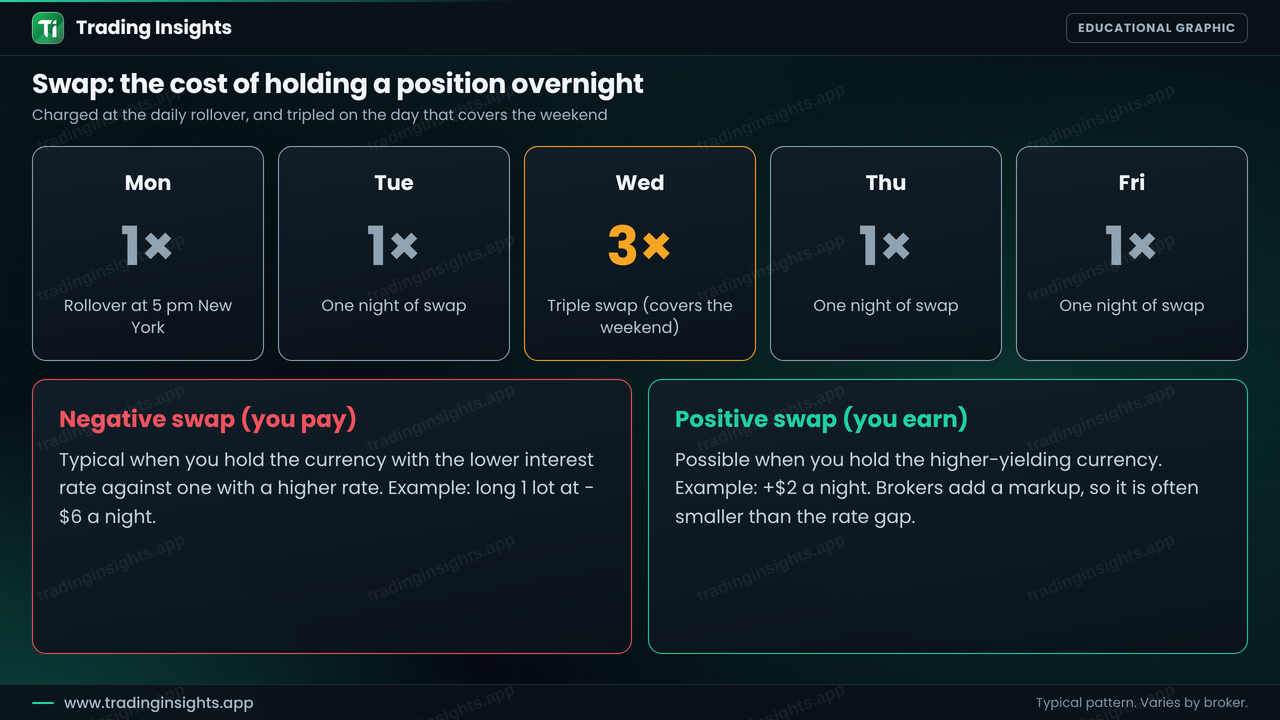
Because spot forex settles two business days after the trade, most brokers charge three times the normal swap on Wednesday night to cover Saturday and Sunday. This is why holding a trade through Wednesday can cost more than the other days. The exact day and rates vary by broker and instrument, so check your broker's specification for the pair you trade. Swap matters little for a day trade that closes the same day, but it adds up for trades held for weeks.
A worked example: what one trade really costs
Here is a hypothetical trade to put the three costs together. You buy 1 lot of EUR/USD and hold it for 2 nights before closing. In this example, the spread is 1.2 pips, the commission is $3.50 per side, and the swap on a long position is $6 per night.
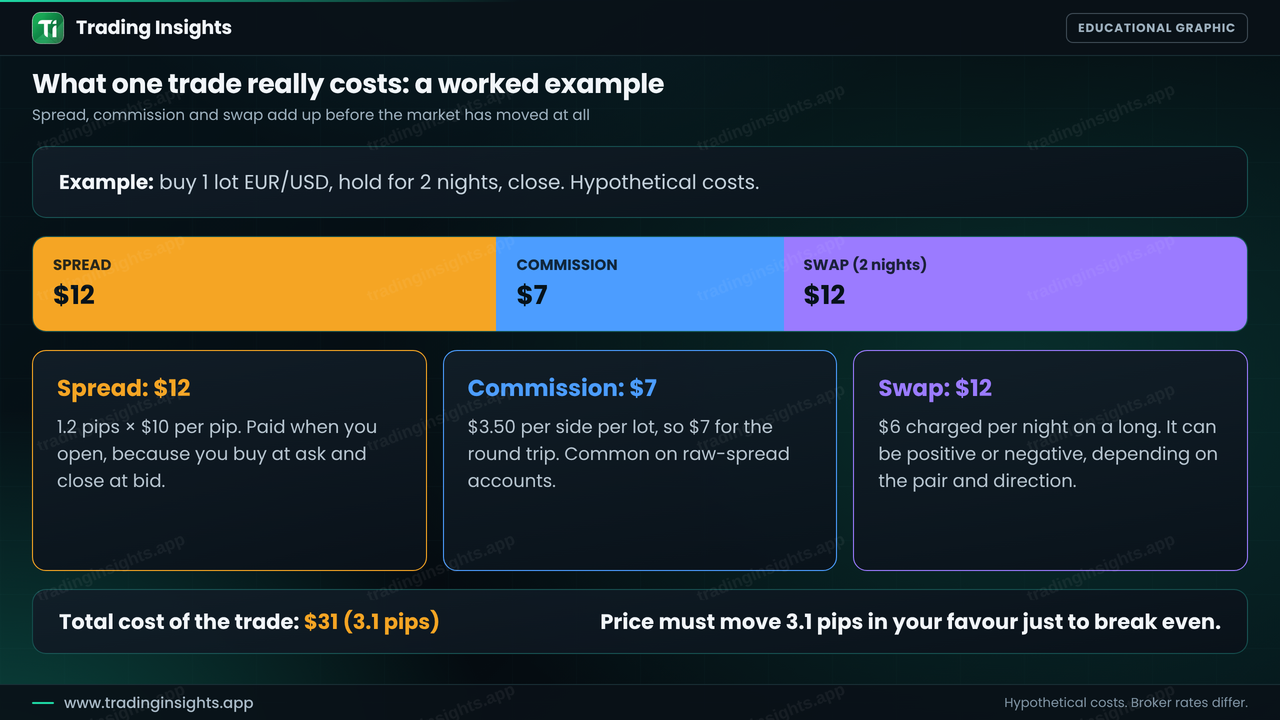
- Spread: 1.2 pips x $10 = $12.
- Commission: $3.50 x 2 sides = $7.
- Swap: $6 x 2 nights = $12.
- Total: $31, which is 3.1 pips at $10 per pip.