Forex trading is buying one currency while selling another, with the aim of profiting from changes in their exchange rate. The word forex is short for foreign exchange. It is the largest financial market in the world, and it runs from Monday to Friday, around the clock. This guide explains how the market works, how to read a currency quote, who is trading and how a simple trade makes or loses money. It also covers the main risks, because understanding what can go wrong is part of learning to trade.
What the forex market is
Every time a company pays a foreign supplier, a traveller exchanges money, or a fund buys foreign assets, one currency is exchanged for another. The forex market is where these exchanges happen. Unlike the stock market, it has no single exchange building. It is a network of banks, brokers and other participants who trade electronically, which is why it runs 24 hours a day from the Sydney open on Monday to the New York close on Friday.
The Bank for International Settlements reported that average daily turnover in global foreign exchange markets reached about $9.6 trillion in April 2025 (BIS Triennial Central Bank Survey). This size means that major currency pairs are very liquid, so you can usually enter and exit quickly with small trading costs.
How currency pairs work
Currencies are always traded in pairs, such as EUR/USD. The first currency is the base currency and the second is the quote currency. The price tells you how much of the quote currency you need to buy one unit of the base currency. If EUR/USD is 1.0850, then 1 euro costs 1.0850 US dollars.
If you buy EUR/USD, you expect the euro to rise against the dollar.
If you sell EUR/USD, you expect the euro to fall against the dollar.
The pairs fall into groups. Majors include EUR/USD, GBP/USD, USD/JPY and USD/CHF, and all contain the US dollar. Minors, or crosses, such as EUR/GBP do not include it. Exotics pair a major currency with one from a smaller economy and usually have higher spreads.
Reading a quote: bid, ask and spread
A forex quote shows two prices. The bid is the price at which you can sell the base currency, and the ask is the price at which you can buy it. The ask is always a little higher. The difference is the spread, and it is the main cost of opening a trade.
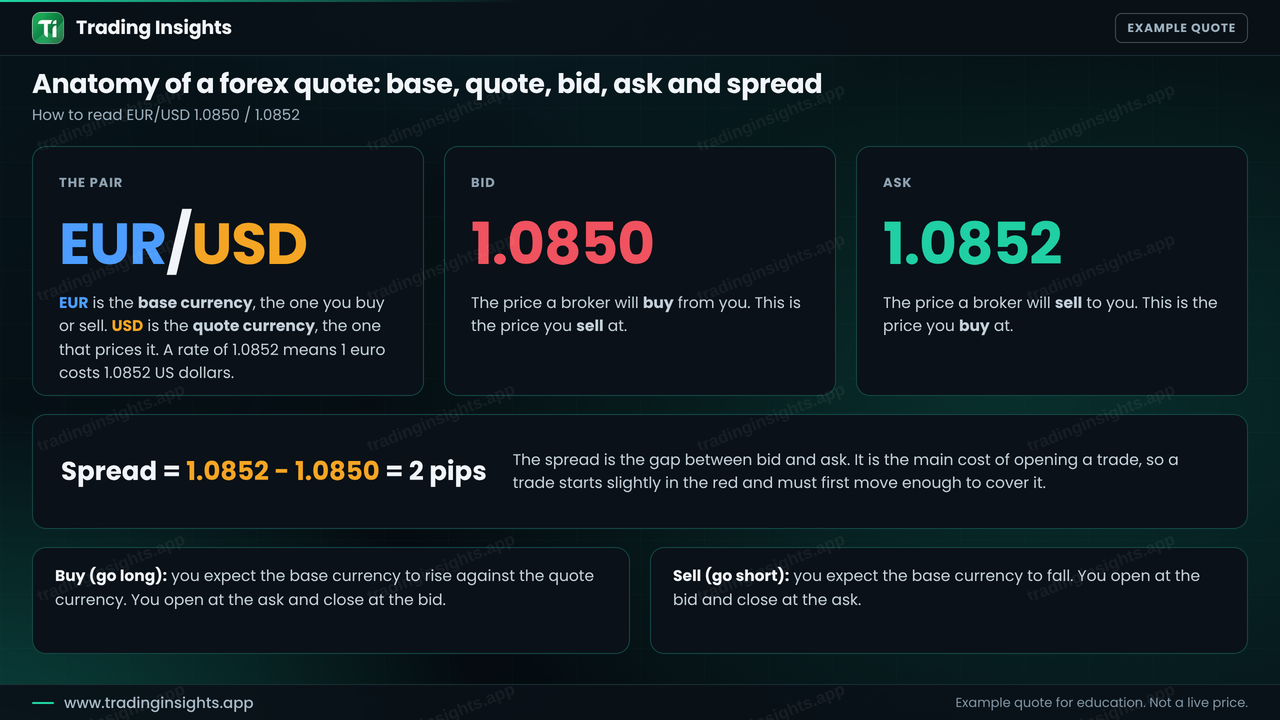
Figure 1: A EUR/USD quote of 1.0850 / 1.0852. The spread is 2 pips.
With a bid of 1.0850 and an ask of 1.0852, the spread is 0.0002, which is 2 pips. If you buy at 1.0852 and immediately close, you would sell at 1.0850 and lose the 2 pips. So every trade starts slightly in the red and must first move enough to cover the spread. To understand pips better, read what pips, lots and leverage are.
Who trades the forex market
Many different participants use the market for different reasons, and they have different effects on price.
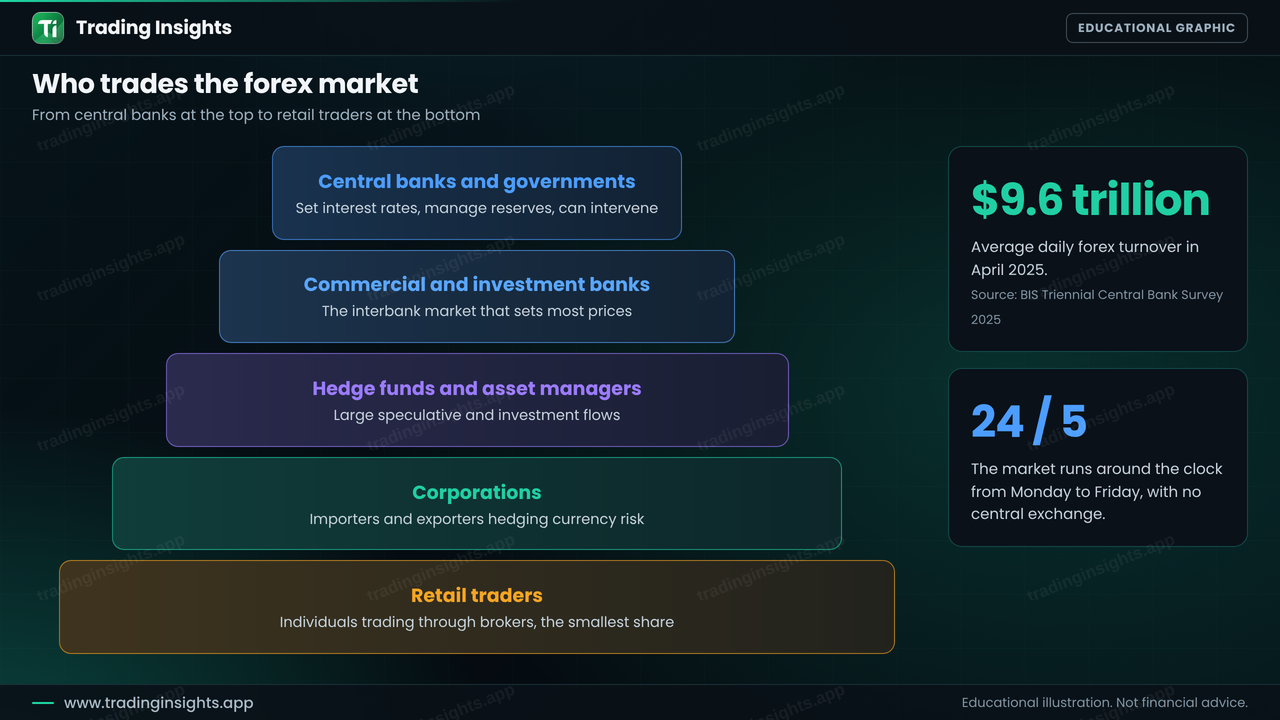
Figure 2: Who trades forex, from central banks at the top to retail traders at the bottom.
Central banks and governments set interest rates, manage reserves and sometimes intervene in the market.
Commercial and investment banks make up the interbank market that sets most prices.
Hedge funds and asset managers trade for speculation and portfolio flows.
Corporations exchange currency to pay for goods, services and investments abroad.
Retail traders trade through brokers and make up the smallest share of the volume.
As a retail trader, you are small compared with the other participants. This is why risk management matters more than trying to predict every move.
A simple trade, step by step
Here is a complete, hypothetical example. You think the euro will rise against the dollar, so you decide to buy EUR/USD.
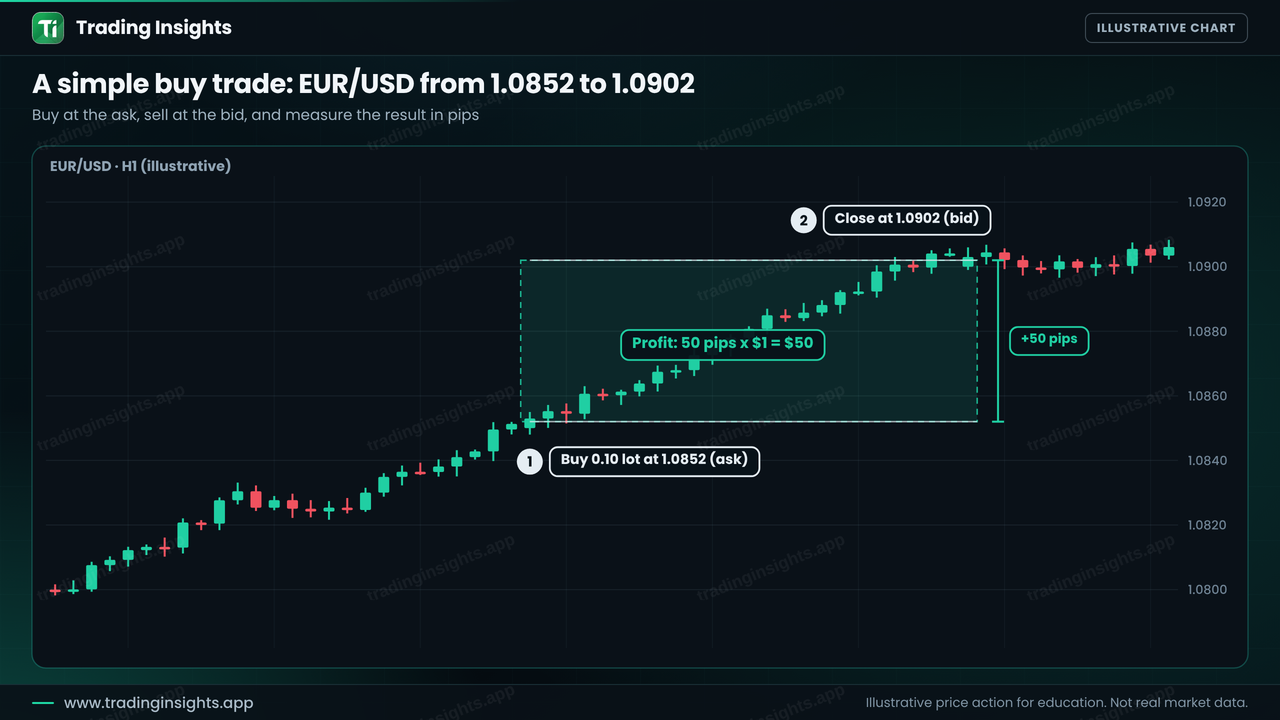
Figure 3: A buy trade opened at the ask (1.0852) and closed at the bid (1.0902), a gain of 50 pips.