
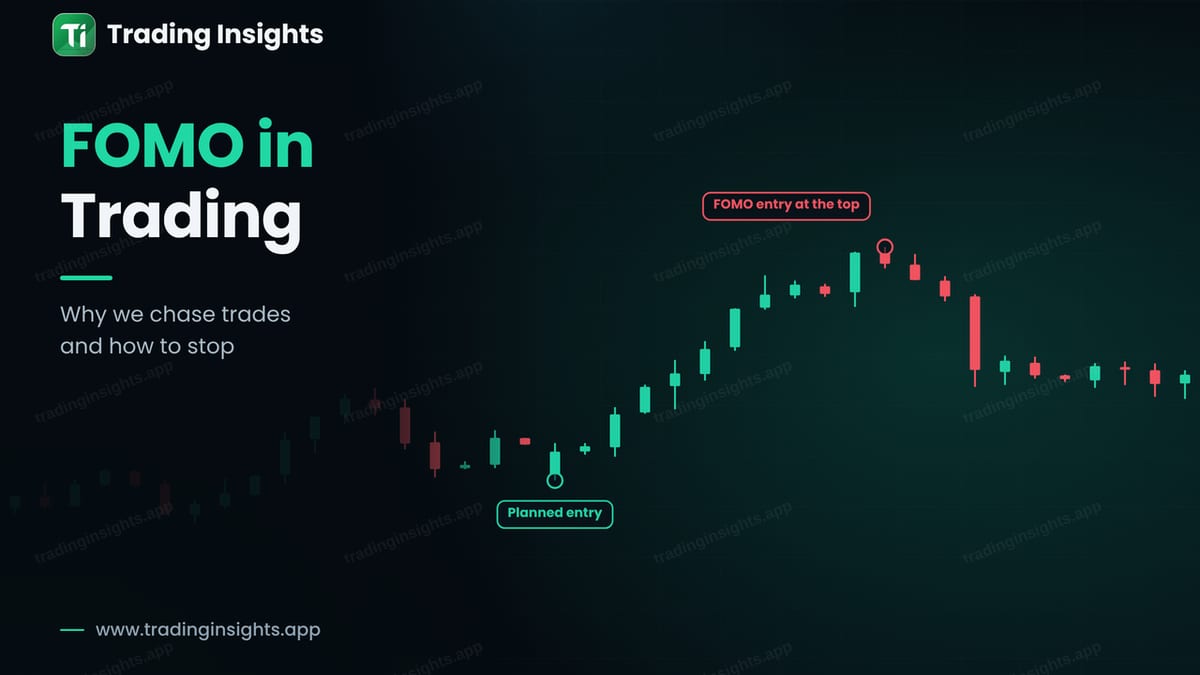
FOMO means fear of missing out. In trading, it is the urge to jump into a move that is already running, because you feel that you will lose a profit if you wait. The price has risen, the candles are big, and everyone seems to be making money. So you buy near the top. Often, the move stops, and the pullback hits your stop.
What chasing looks like
Every strategy has a planned entry, usually after a pullback or a confirmation. FOMO replaces it with a later and worse entry. The chart below shows the same move with two entries. The first trader waits for the pullback and buys at the planned level. The second trader sees the move, feels late, and buys near the high.
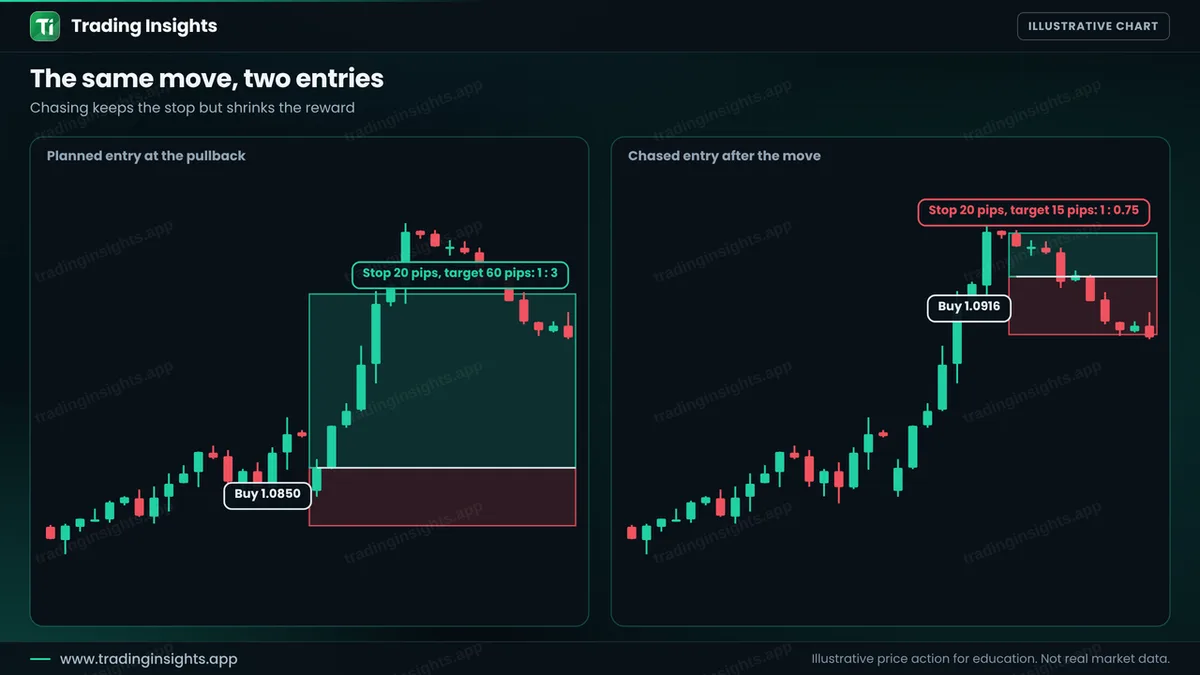
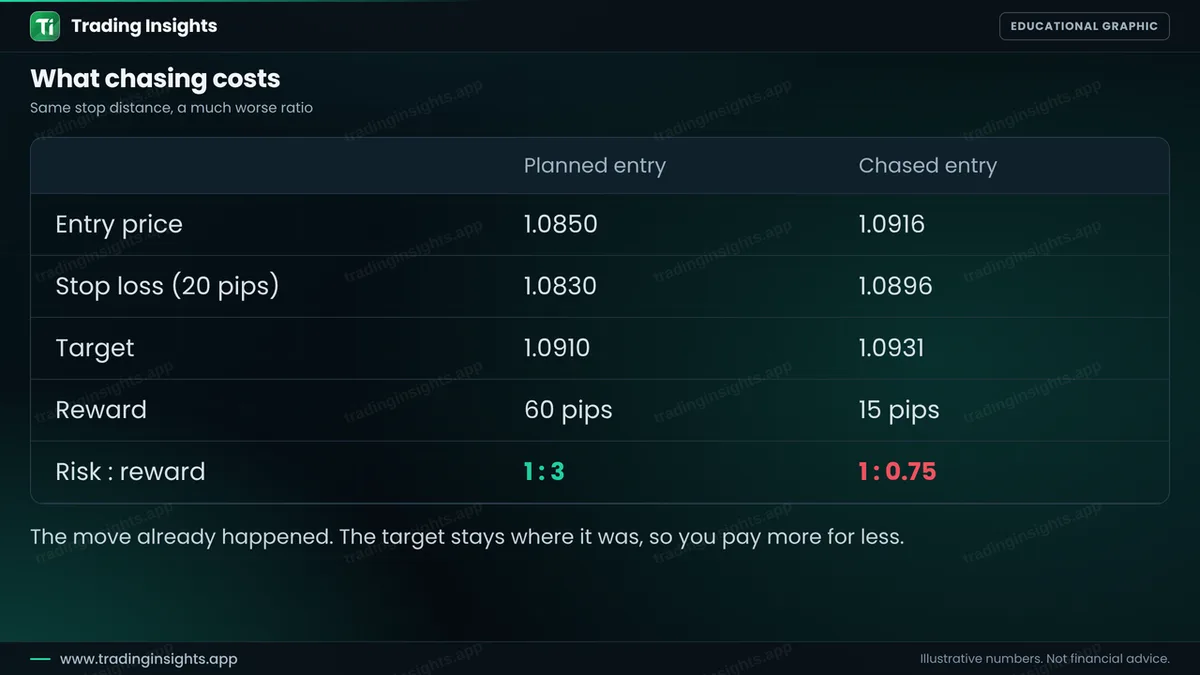
Both trades have a stop of 20 pips. But the planned entry has room for a target of 60 pips, and the chased entry has only 15 pips left before the previous high. The first trade offers a ratio of 1:3. The second offers 1:0.75, which means you risk more than you can win.
The numbers behind it
At a ratio of 1:0.75, you need to win about 57% of trades just to break even, because 1 / (1 + 0.75) = 0.57. A planned entry at 1:3 needs only 25%. So chasing does not only feel bad. It changes the maths against you. For the full idea, see trading expectancy.
Why FOMO happens
- Seeing others profit. Social media shows winning trades and hides losing ones.
- A recent miss. After missing a move, you want to catch the next one at any price.
- No clear plan. Without exact entry rules, any candle looks like a signal.
- Money pressure. If you need a result, every missed move hurts more.
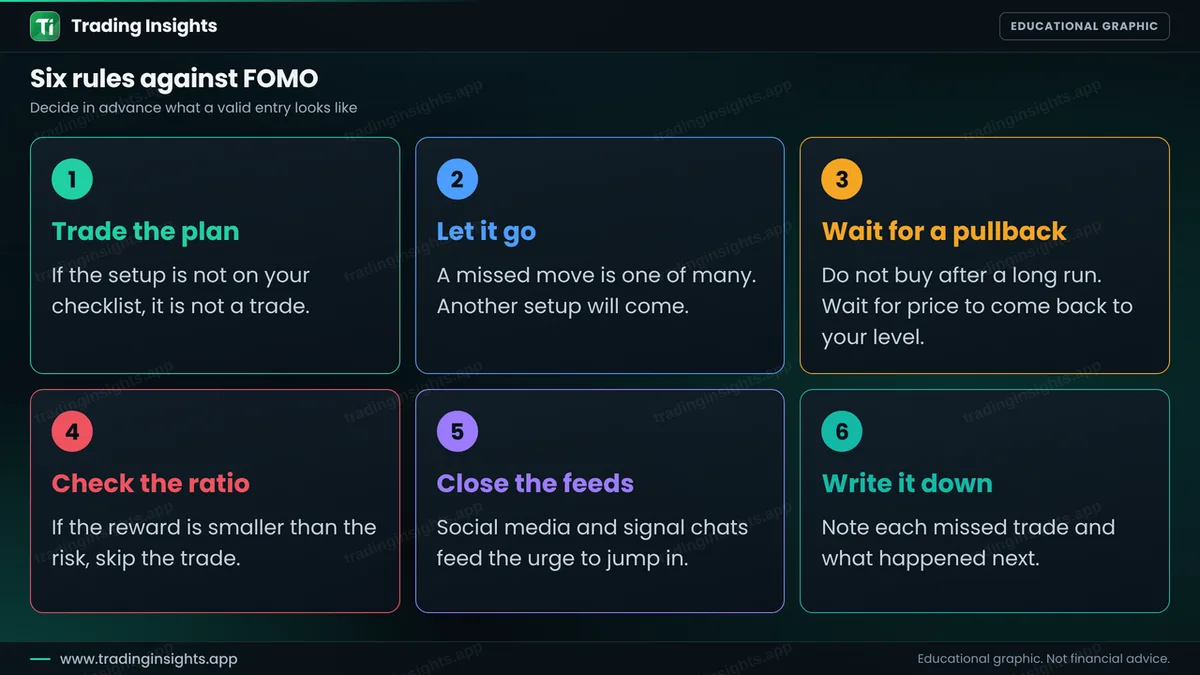
Six rules against FOMO
- Trade the plan. If the setup is not on your checklist, it is not a trade.
- Let it go. A missed move is one of many. Another setup will come.
- Wait for a pullback. Do not buy after a long run. Wait for price to come back to your level. See EMA pullback strategy.
- Check the ratio. If the reward is smaller than the risk, skip the trade. Use the risk reward calculator.
- Close the feeds. Social media and signal chats feed the urge to jump in.
- Write it down. Note each missed trade and what happened next. You will see how often the chase would have lost.
What to do when you feel the urge
First, pause. Ask: is this setup in my plan? Where would my stop go, and where is the target? If the answer is that the stop is far and the target is close, the trade is bad, however exciting the candle looks. Set an alert at your planned entry level and step away. If price returns, you trade. If it does not, you have lost nothing. FOMO is related to revenge trading and overtrading, and the same fixed rules help with all three.
Common mistakes
- Entering because a candle is large.
- Moving the stop wider to keep the trade alive.
- Increasing the size to make up for the late entry.
- Following a signal group without checking the entry.
- Counting a missed trade as a loss.
Frequently asked questions
What is FOMO in trading?
It is the fear of missing out. It pushes a trader to enter a move late, without a plan, in order not to miss the profit.
Why is chasing a trade bad?
Because the entry is worse, the stop is the same distance and the target is closer. The risk-reward ratio drops, so you need to win more often to break even.
Is it ever fine to enter late?
If your plan has a rule for it, such as a breakout entry with a defined stop and target, it is part of the plan. Entering on emotion is not.
How do I stop feeling FOMO?
Use a written plan, set alerts at your levels, limit social media during trading and keep a journal of missed trades.
Trading involves risk. This is education, not financial advice. The charts are illustrative and not real market data. Trading carries risk, and no method guarantees results.


