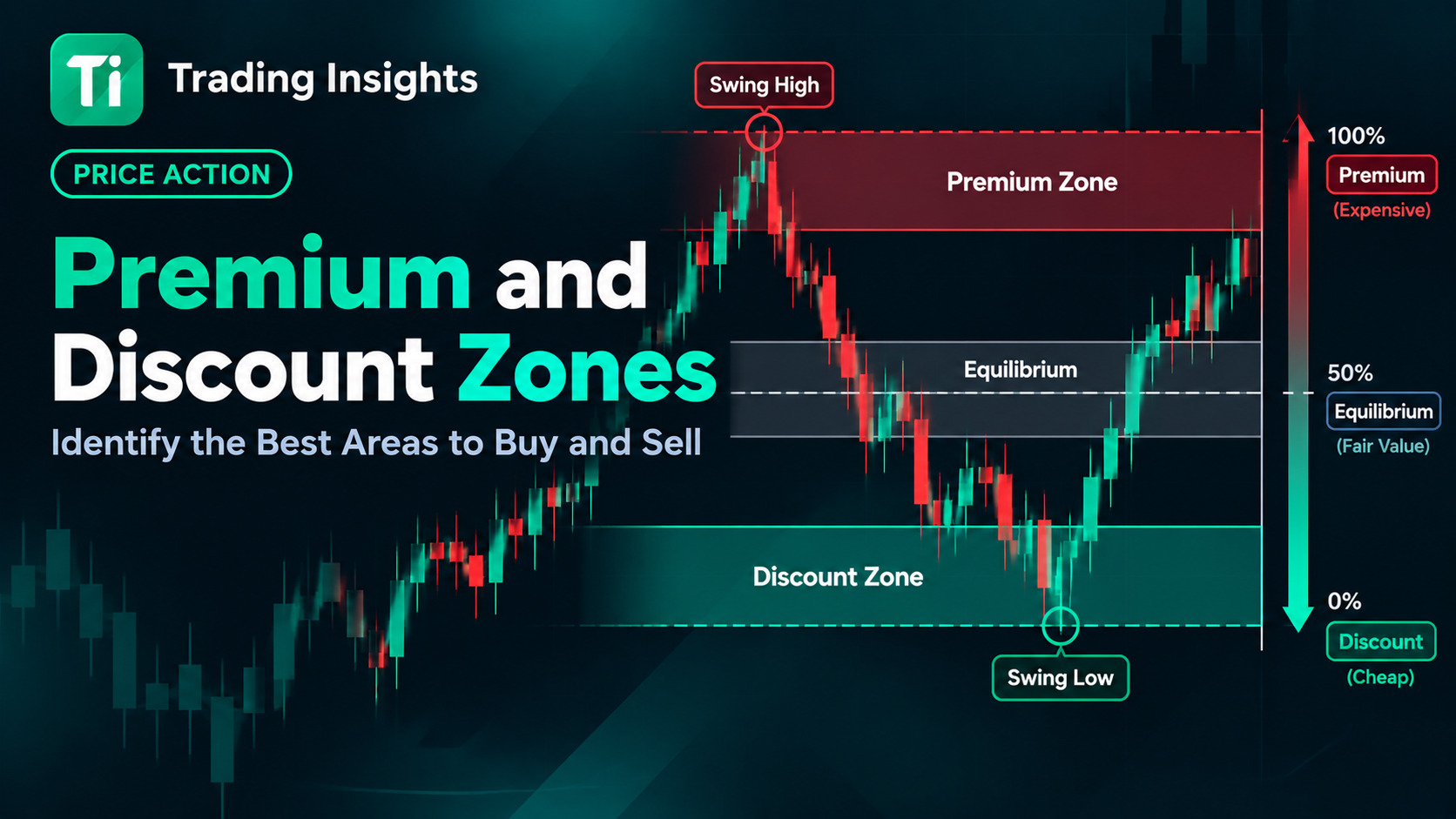
Premium and discount are labels traders use for the upper and lower halves of a defined price range. After selecting a meaningful swing low and swing high, the midpoint—often called equilibrium—divides the range. Prices above the midpoint are described as premium, while prices below it are described as discount. These labels are relative to the chosen range, not proof that price is objectively expensive or cheap.
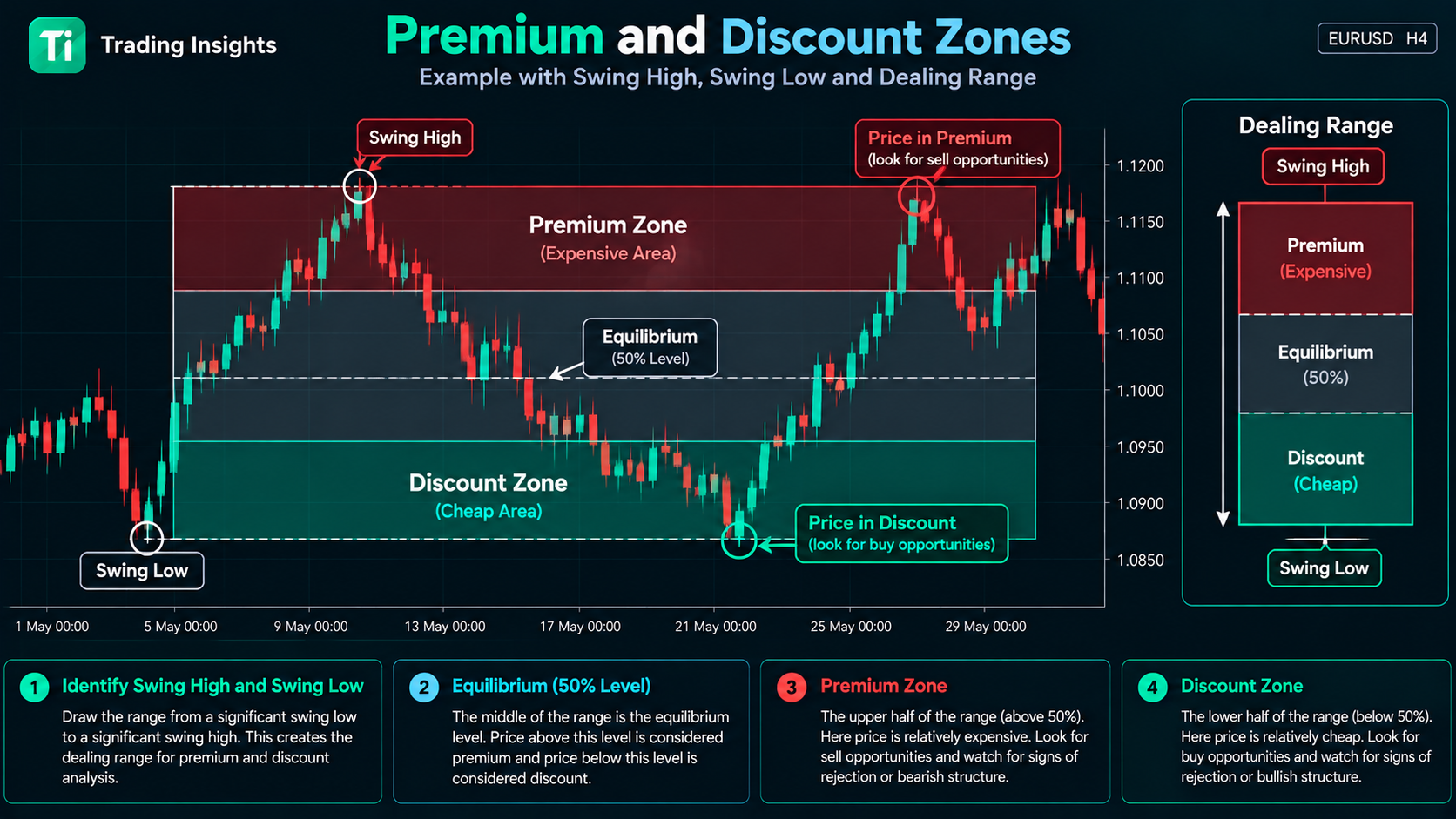
Illustrative chart: Trading range split into premium above equilibrium and discount below equilibrium.
How to define the range
Select a clear, relevant swing low and swing high.
Mark the midpoint between them.
Label the upper half premium and the lower half discount.
Reassess the range if market structure changes materially.
How traders use the zones
Some traders prefer to look for potential buys in discount during a bullish context and potential sells in premium during a bearish context. The zone alone is not an entry signal: wait for your own confirmation rule, such as a structure shift or a defined setup.
Common mistakes
Choosing swing points after seeing the outcome can make almost any price look like premium or discount. Keep the range-selection rule consistent, consider higher-timeframe context, and do not assume price must return to equilibrium.
Build a testable plan
Write down how you choose the range, what confirms an entry, where the idea is invalidated, and how targets are set. Backtest the complete rules rather than the midpoint concept in isolation.