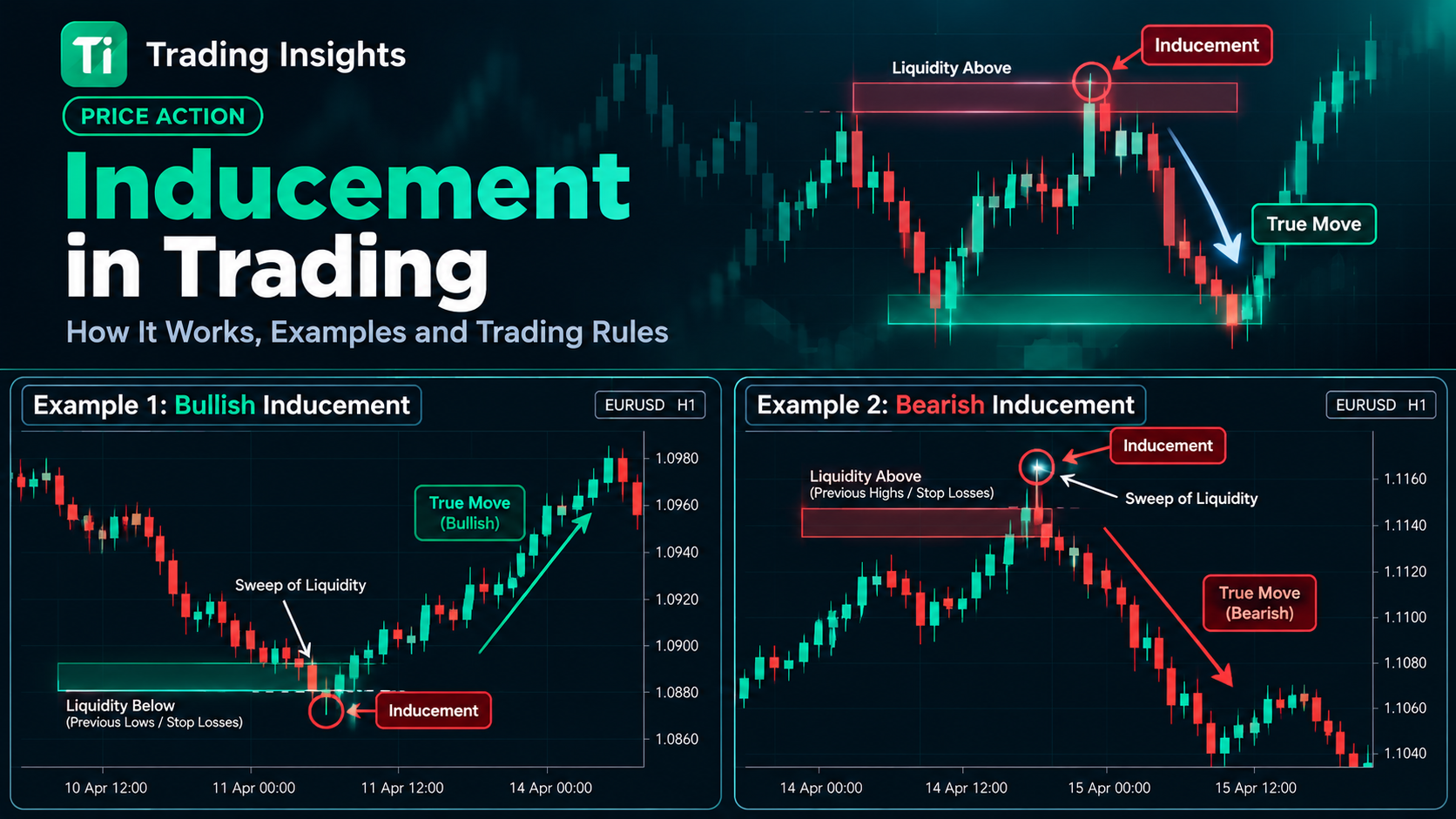
In some Smart Money Concepts (SMC) communities, inducement describes a minor swing or level that appears to attract early entries before price moves toward a more significant area. The term is interpretive: a chart does not reveal traders' intentions, and different educators may label the same sequence differently. For useful analysis, define the level and the expected price behavior in advance.
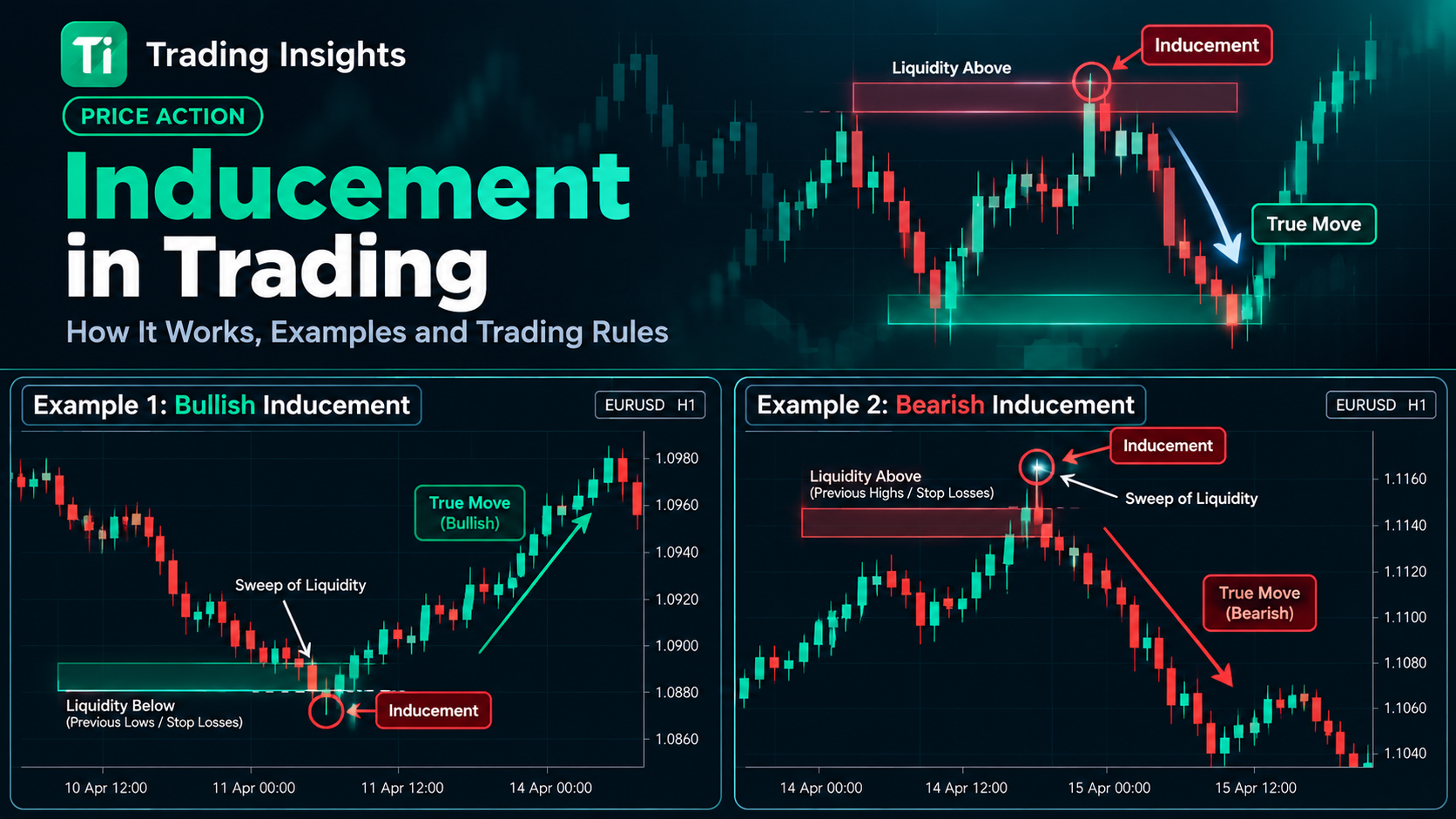
Illustrative chart: Minor swing level highlighted before price moves toward a larger liquidity area.
How to assess a possible inducement level
Mark the larger structural level or liquidity area that matters to your plan.
Identify a nearby minor swing that is objectively visible before the next move.
Record whether price takes that minor level and how it reacts afterward.
Wait for your required confirmation rather than assuming the move was engineered.
Keep the concept objective
Avoid calling every small swing inducement only after price moves away from it. Specify measurable criteria, such as the swing definition, the distance to the main level, and what counts as a valid sweep or reaction.
Common mistakes
Assuming intent, entering before confirmation, and changing labels after the outcome can create hindsight bias. Treat inducement as a hypothesis to test—not as proof of institutional activity.
Risk controls
Define invalidation, position size, and target before entry. Review enough historical examples to determine whether the concept adds value beyond your existing market-structure rules.