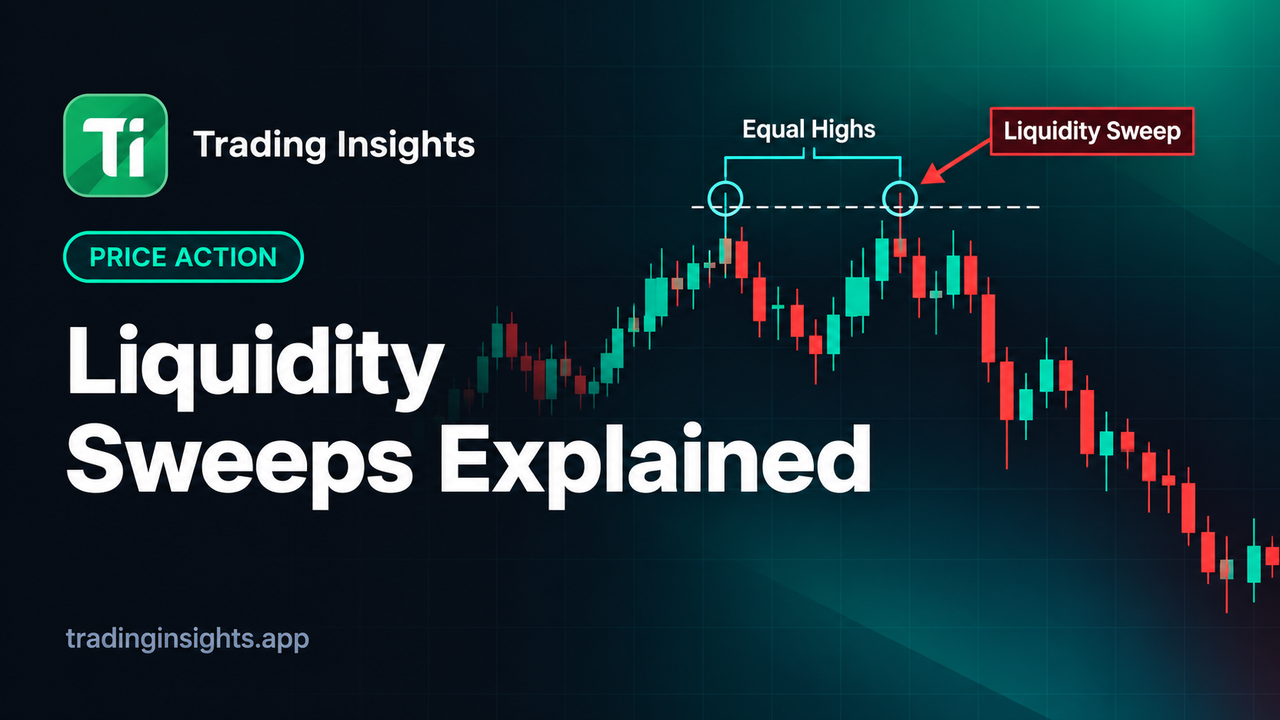
A liquidity sweep is a trader's description of price moving beyond a visible level—such as equal highs, equal lows, or a prior swing—and then rejecting or returning through that level. Traders watch these areas because stop orders and breakout orders may cluster around obvious prices. A sweep is an interpretation of price behavior; a chart alone does not reveal every participant's orders.
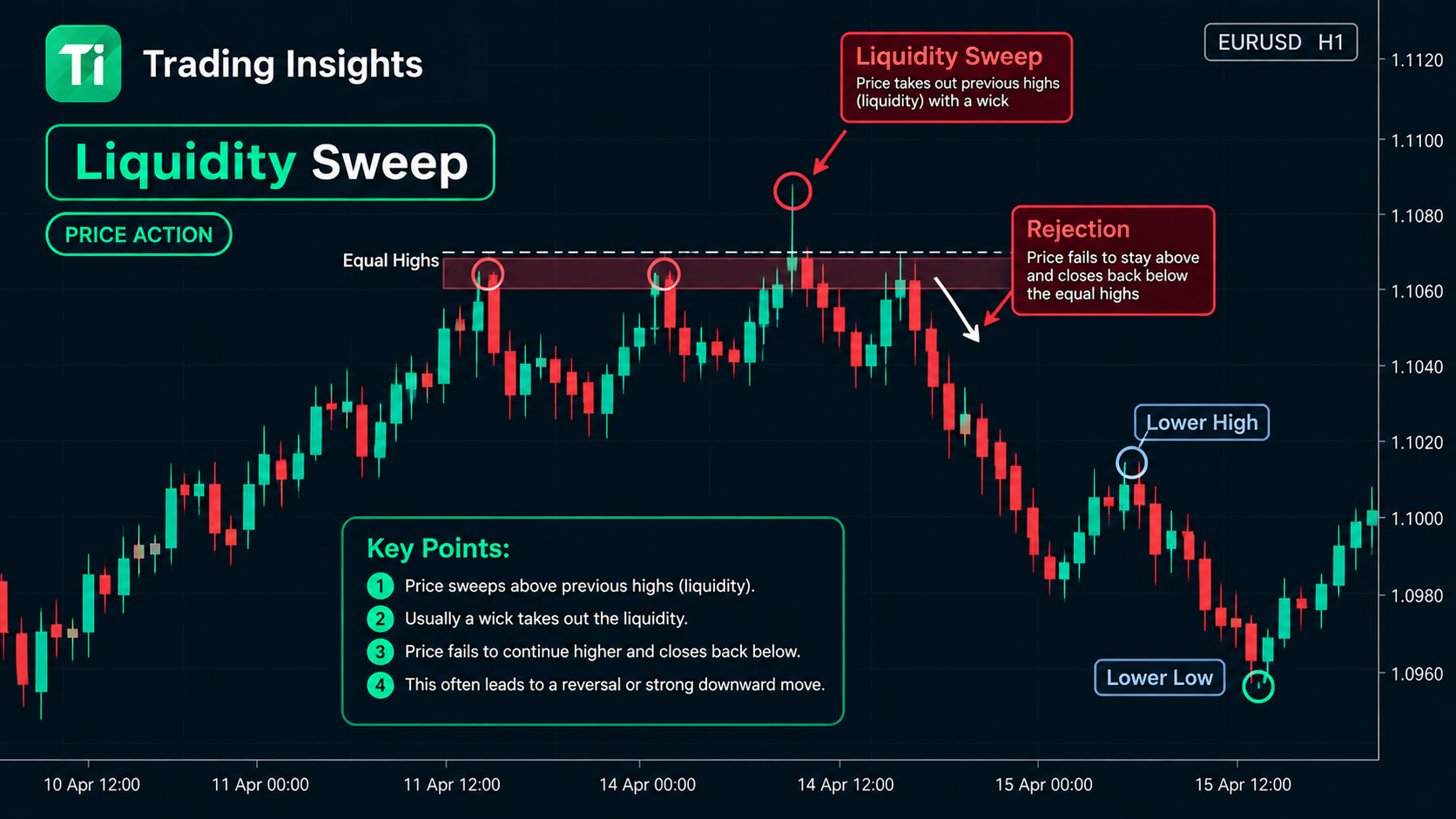
Figure 1: A move above equal highs followed by a close back below can be interpreted as a possible sweep.
Where sweeps are often watched
Equal highs or equal lows that stand out on the chart.
Previous day or session highs and lows.
Clear swing points near the edge of a trading range.
Sweep or breakout?
A brief move beyond a level followed by a close back inside the range may support a sweep interpretation. Sustained trading and acceptance beyond the level may instead support a breakout interpretation. One candle cannot reliably settle the question in every market; observe follow-through and use a pre-defined confirmation method.
Common errors
Do not label every failed breakout a deliberate stop hunt. Do not enter immediately just because price crossed a high or low. Consider trend context, volatility, session conditions, and where your trade idea would be invalidated. A sweep can continue into a genuine breakout, and reversals can fail.
Backtest objective definitions—for example, how far price must cross a level and how quickly it must reclaim it—rather than relying on hindsight labels.