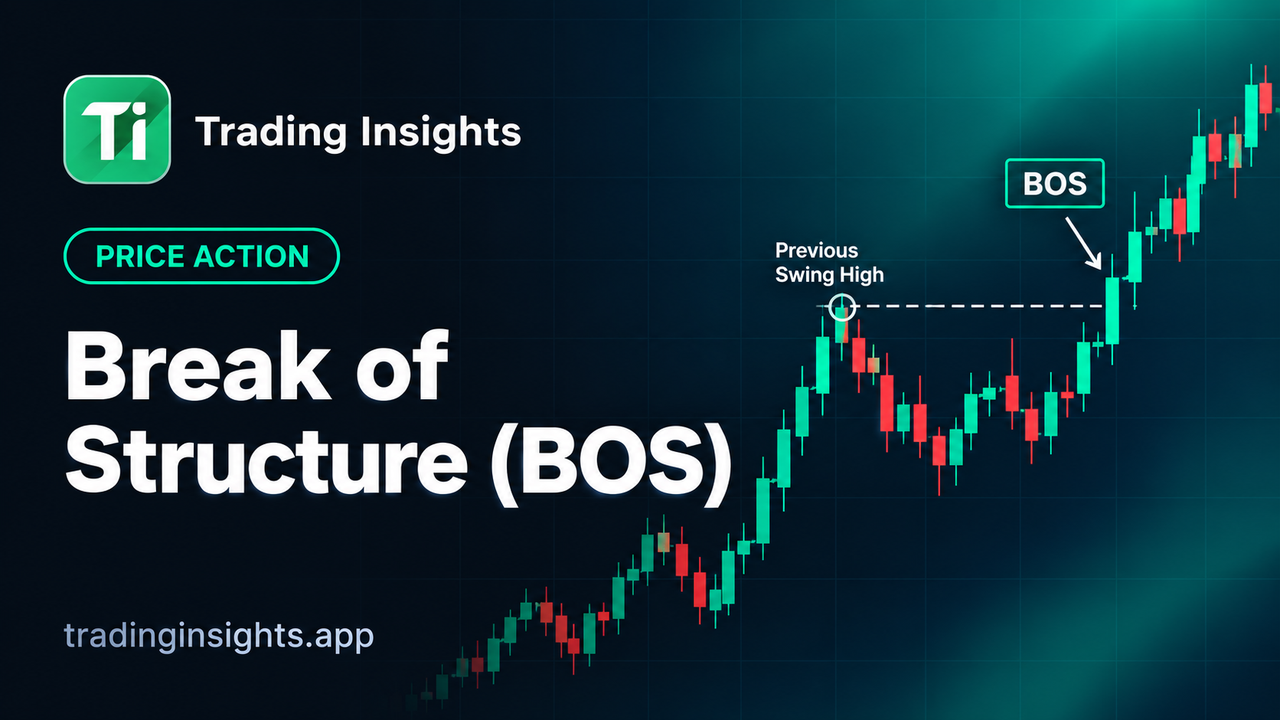
A Break of Structure (BOS) occurs when price breaks a meaningful prior swing in the direction of the prevailing move. In a bullish sequence, traders look for price to close above a prior swing high; in a bearish sequence, they look for a close below a prior swing low. A wick through a level alone can be less convincing, so define your confirmation rule before trading.
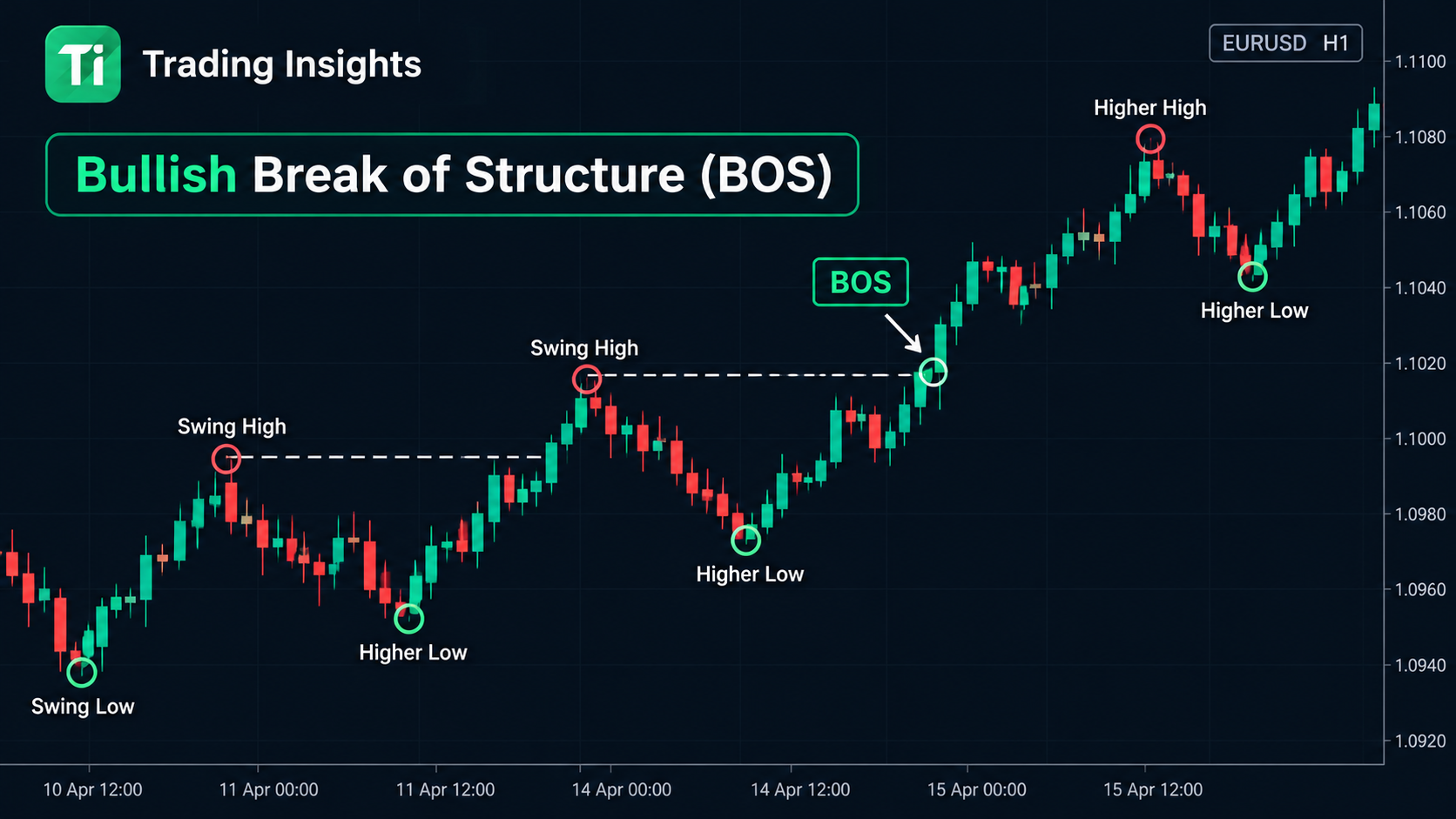
Figure 1: Price closes above a prior swing high, suggesting bullish structure continuation.
How to identify a BOS
Mark clear swing highs and swing lows rather than every small candle pivot.
Determine the current directional sequence: higher highs and higher lows for an uptrend, or lower lows and lower highs for a downtrend.
Wait for price to break a relevant swing. Decide whether your method requires a candle close beyond the level.
Check the larger timeframe and nearby liquidity before treating the break as actionable.
Common mistakes
Calling every wick a BOS creates noisy signals. A break can also fail, so a BOS is evidence of structure—not a guarantee that price will continue. Avoid entering solely because a level was crossed; plan invalidation, position size, and the next logical target first.
Practical checklist
Is the broken swing clear and significant?
Did price satisfy your close/confirmation rule?
Does the break align with the broader context?
Is there enough room to the target to justify the risk?
This is educational material, not a promise of trading results. Backtest your rules on the instruments and timeframes you trade.